

Mother of boys murdered in Mayo shares details of deaths 13 years on as father seeks parole
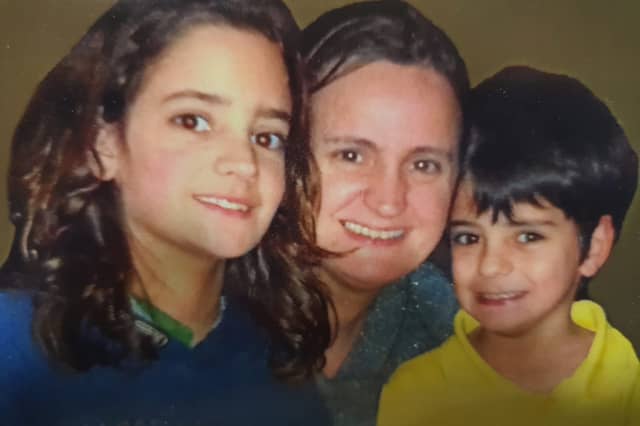

Kathleen Chada has released all the details surrounding how her two sons were murdered in an attempt to keep their killer behind bars
A mother whose two sons were killed by their father in Mayo 13 years ago has revealed the details of what exactly he did to them as he is now entitled to apply for parole.
Kathleen Chada from Ballinkillen in Co Carlow has outlined the severity of what her ex-husband did to her two children, Eoghan (10) and Ruairi (five), when he killed them in Mayo on July 29, 2013.
Sanjeev Chada told his wife he was taking their children bowling on a summer evening 13 years ago, but instead drove them to a small lane near Ballintubber Abbey in Mayo and took their lives before attempting to take his own.
“I can't change it. I can't understand it. I can't explain it. All I can do is live with it,” Kathleen, a nurse, said ahead of their anniversary later this month.
The anniversary mass for her boys has already taken place, as in the past few years, it’s been arranged to coincide with the mass for her father, who passed away six years ago.

A mass for the three is now held in May, but Kathleen still marks her sons’ one by taking a week off work and heading west.
“Ballintubber Abbey is where I tend to go. I find it gives me peace and it re-energises me in a way,” she shared, while acknowledging that some may find it odd for her to spend time close to where her children were killed.
However, Kathleen has never felt uncomfortable there, and she feels lucky to feel how she does about the area.
“I went to them at the actual point where they were killed, and I've always said they're not there. There's no sense of them there for me ... I felt that from the very first time that I went there, which would have been probably about 10 days after they were killed,” she said.
After the yearly visit, it feels like a new beginning for Kathleen.
In the months leading up to the anniversary and around her son Eoghan’s birthday at the end of June, Kathleen feels her energy levels decline.
“I still have to function; I go to work, I do all the right things, but it's a time of year that's more difficult for me, yet just after the anniversary, from the very end of July I just feel a new energy. I always describe August as my new year,” Kathleen said.
That new year is coming up for Kathleen, and it would have been the start of a new chapter for her boys too.
Eoghan likely would have been graduating from college, and Ruairi, who would have had his debs last week, would probably have been starting college.
Seeing the boys' friends is a comfort for Kathleen, as she can see, to a certain extent, what her boys would have been like.
”Their heights for one, they all seem like they're just so tall and I always feel like when I get a hug from them that I'm nearly putting my arms around their waist if you like... They’re such a lovely bunch of chaps,” she said.
Kathleen doesn’t see them regularly, but when she does, it means a lot to have the chats and a hug.

In the early days after the death of her sons, Kathleen worried about the impact it would have on the other children in the community, but is glad to see that they seem to have “weathered the loss.”
Kathleen does have a niece and nephew who were born in and around the same time as Ruairi, which makes her very aware of where he would have been in life.
Moments like the Leaving Cert, the Debs, and CAO offers coming out are when she feels the loss the most, rather than birthdays, Christmasses, and anniversaries.
“It's more the little things that just sneak up unaware,” she explained, highlighting so many questions about her boys that will never be answered.
Another question that has been looming over Kathleen in recent months is whether Sanjeev will be eligible for parole.
After 12 years in prison in Ireland, criminals have the right to apply for parole.
If denied, they can do that every two years until they are eventually released.
As it’s coming up on 13 years since Sanjeev was jailed, he now has the right to apply for parole, meaning Kathleen has had a lot of work on her hands trying to prevent him being released.
“I'm quite upset and angry that he felt that he had the right to apply for parole in the first place given what he did,” Kathleen said.
Sanjeev pleaded guilty before being sentenced, meaning the details of what he did to his children were never made public, which Kathleen believes he did as a way to protect himself.
As a result, the parole officers are not aware of how he did what he did.
This is what made Kathleen go public with never-before-heard details of her son’s murder in a three-part podcast series called ‘Forever My Boys’ by The Irish Sun.
In it, she outlines the extent of what her ex-husband did to her boys, in particular to her older son Eoghan, who had to have his entire face reconstructed ahead of their wake and funeral because every single bone in it was broken.
He also suffered from a broken collarbone, a completely shattered skull, and a broken femur; the strongest bone in the human body.
In addition to releasing these details to the public, she has told the parole board.
”It wasn't enough that they would know what he did. They needed to know how he did it... I also have to live with the presumption that Ruairi did witness what was happening and there's a lot of torment in that. There's a lot of pain in what they went through in those last moments,“ Kathleen said.
After violently killing his older brother, Sanjeev put Ruairi on his lap to comfort him and proceeded to strangle him with a rope.
Kathleen is “reasonably certain” no parole will be given this time around, but cannot make any presumptions.
She will be told either way, and no decision has been made as of yet.
Over the past 10 years, Kathleen has been working with a group of people who have come together informally to make a change to murder and homicide sentencing parole regulations.
At the moment, there is no minimum sentencing requirement when it comes to cases of that kind, unless you kill a member of An Garda Síochána.
Someone who commits this crime will automatically receive a sentence of a minimum of 40 years with no parole.
The Sentencing and Victim Equality (SAVE) Group are trying to get something similar implemented, and has been working with the Minister for Justice, Jim O’Callaghan, on the matter.
The group wants a regulation to be in place for when a judge is handing out a sentence, like Sanjeev’s two life sentences, where they have a guideline in place that the person being sentenced has to serve a minimum number of years before being considered for parole.
“It is something that's in the UK and Australia and various other countries, but we want to see that introduced here in Ireland. It is in progress, and there are talks about it at the moment, but my concern is that the reading around it is more that the judge can make a recommendation,” Kathleen said.
“We would like that to be a bit more definite because nobody has to listen to a recommendation,” she added.
The introduction of this regulation would make the lives of those survived by loved ones who have been killed a lot easier.
Otherwise, they will have to write to the parole board every year, pleading for the perpetrators to be kept behind bars.
The past 13 years have been extremely difficult for Kathleen, but she has been able to find a new version of happiness and way of life for herself.
To find out more, you can buy Kathleen’s book ‘Everything ’, which was published in 2023, or listen to The Irish Sun podcast.