Met Éireann issues weather warning with two counties braced for brutal conditions
Search


20 Jan 2026

Please allow ads as they help fund our trusted local news content.
Kindly add us to your ad blocker whitelist.
If you want further access to Ireland's best local journalism, consider contributing and/or subscribing to our free daily Newsletter .
Support our mission and join our community now.
To continue reading this article, you can subscribe for as little as €0.50 per week which will also give you access to all of our premium content and archived articles!
Alternatively, you can pay €0.50 per article, capped at €1 per day.
Thank you for supporting Ireland's best local journalism!

An inquest into the death of a mother focused on whether or not she had asked for a caesarean section
An inquest into the death of a 36-year-old mother of three has heard conflicting evidence as to whether or not she asked for a caesarean section, which she did not receive.
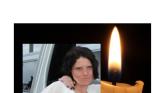
Tracey Campbell Fitzpatrick died in the early hours of Easter Monday last year shortly after giving birth to her third child, Max, at St Luke’s Hospital, Kilkenny.
Ms Fitzpatrick, originally from Mayo, had being living with her husband, Bernard, and their two children in Nurney, Co Carlow.
Haemorrhage
The inquest heard that after baby Max was delivered at 12.55am on 28 March, 2016, Ms Fitzpatrick lost a lot of blood during a postpartum haemorrhage. Midwives estimated that she lost about 1.2 litres of blood within half an hour of the delivery.
The Coroner’s Court in Kilkenny heard it was decided to transfer her from the labour suite to the operating theatre for examination under anaesthetic, but her condition deteriorated on the way and she became pale and unresponsive in theatre.
The consultant obstetrician on call, Dr David McMurray, had been kept informed by phone of Ms Fitzpatrick’s situation, and he told the inquest that her vital signs had been good, that she was very stable and that all the correct procedures had been followed.
He said her condition had been good until her transferal to theatre.
The inquest heard that as the situation developed, he arrived around 2.20am, the same time as the consultant anaesthetist.
They worked on Ms Fitzpatrick and the bleeding ceased, but she suffered a cardiac arrest at 2.30am.
The resuscitation team worked on her for over 70 minutes, but she was pronounced dead at 3.45am.
The jury returned a verdict that death was by natural causes, in line with the medical evidence, and was told the Health Service Executive had carried out an “extensive” investigation into Ms Fitzpatrick’s death.
Some of the hospital systems have since been changed, and a procedure for fitting ‘wide-bore’ cannulae to pregnant women to allow the rapid delivery of fluids, if needed, is now in place.
The jury also recommended that a consultant should attend a patient to monitor the situation if blood loss reaches emergency levels.
‘Pleaded for a c-section’
Bernard Fitzpatrick told the inquest that his wife’s blood pressure had been ‘up and down’ in the days before Max was due to be born and that she had it checked in the hospital on a number of occasions.
She was admitted to St Luke’s on Saturday, March 26. The following morning, Dr McMurray and another doctor met them, and Ms Fitzpatrick asked them if she could have a c-section or be induced.
Mr Fitzpatrick said the consultant replied ‘We are not going to break any eggs on Easter Sunday’.
In his evidence, Dr McMurray said he did say words to that effect but reiterated that Ms Fitzpatrick had not asked for a caesarean section.
The court was told that Mr Fitzpatrick contends that she had pleaded with the doctor to have a section.
The inquest heard that on the night of the delivery Bernard and Tracey’s parents were in a waiting room after she had been brought to theatre, and that they were relatively calm and in good form.
About an hour later, Dr McMurray came out to them and said he had bad news: “I’m sorry, Tracey is no longer with us.”
Unpreventable and very rare
The inquest heard a statement from Ms Fitzpatrick’s father James Campbell that the next day he asked Dr McMurray if she would still be alive if she had had a caesarean section.
Mr Campbell said that Dr McMurray had responded by saying that she would be alive if she had got a c-section but that the doctor had said that she had not asked for one.
Dr McMurray told the inquest that if he had arrived an hour earlier in theatre, he would have administered the same drugs as were given to Ms Fitzpatrick by the medical staff, and in the same sequence.
He said one of the critical matters in her case was that it was very difficult to get intravenous access to her veins, to administer blood and fluids.
He said that where he trained and worked in west Scotland, they always insert a large cannula, used to deliver fluids into a patient, beforehand, in case an emergency arises during or after labour.
Dr Peter Kelehan, a perinatal paediatric pathologist, said that during the postmortem examination he found foetal skin cells within the capillaries in Ms Fitzpatrick’s lungs.
These cells he said must have come from the baby’s amniotic fluid – the fluid surrounding the baby in the womb – and that this was definitive evidence of what is known as Amniotic Fluid Infusion Syndrome, which he said was unpredictable, unpreventable and very rare.
The fluid prevents the mother’s blood from clotting, causing bleeding, he said, and in his opinion, this was the primary cause of death.
Representing the family, Aongus O’Brolchain SC said to him that the syndrome had nothing to do with this case, but Dr Kelehan said it was probably one of the most well-recognised and well-categorised causes of maternal death.

Subscribe or register today to discover more from DonegalLive.ie
Buy the e-paper of the Donegal Democrat, Donegal People's Press, Donegal Post and Inish Times here for instant access to Donegal's premier news titles.
Keep up with the latest news from Donegal with our daily newsletter featuring the most important stories of the day delivered to your inbox every evening at 5pm.

This publication supports the work of the Press Council of Ireland and Office of the Press Ombudsman, and our staff operate within the Code of Practice of the Press Council. You can obtain a copy of the Code, or contact the Council, at www.presscouncil.ie, Lo-call 1800 208 080 or email: info@presscouncil.ie.