

“Everything is becoming electric,” Mayo councillor calls for action to tackle high electricity prices
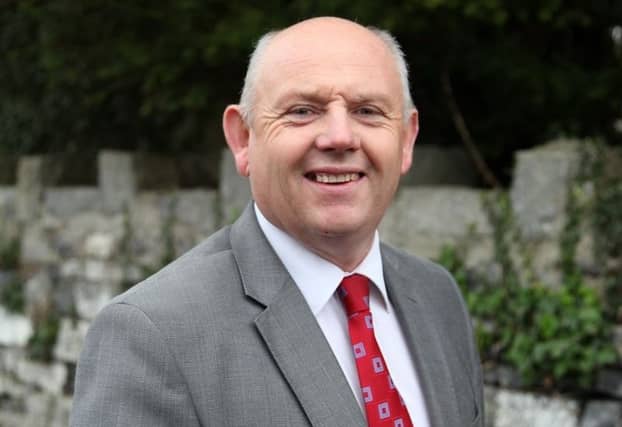

Councillor Patsy O’Brien says Government must address underlying costs rather than rely on temporary supports
Mayo Independent councillor Patsy O’Brien has called on the Government to develop a long-term plan to reduce electricity prices, arguing that household credits and other financial supports fail to address the underlying causes of high bills.
The Robeen-based councillor said Budget 2027 had missed an opportunity to set out a meaningful strategy for reducing electricity costs, which he said were placing growing pressure on households, farmers and businesses.
Cllr O’Brien acknowledged that the Government could not simply dictate the prices charged by electricity suppliers, given European market rules and the role of the independent regulator.
However, he said the Government had significant responsibilities in energy policy, infrastructure investment and legislation.
“What I am asking is why we are not doing more to tackle the actual cost of electricity instead of constantly looking for ways to subsidise the price people are being charged,” he said.
He argued that measures such as reducing VAT and providing electricity credits could offer immediate relief but would not resolve the fundamental problem.
“If electricity is too expensive in the first place, giving people some of their own money back through Government supports is not a long-term solution,” he said. “The taxpayer is still paying.”
“We need to ask why electricity is so expensive in Ireland, what is driving those costs and what can be done to bring them down,” Cllr O’Brien added.
Cllr O’Brien pointed to European figures showing that Irish household electricity prices were approximately 40% above the EU average.
He said the cost of electricity had become increasingly important as households and businesses moved towards electric vehicles, heat pumps and other electricity-dependent systems.
“Everything is becoming electric. What happens when there is a power cut? And what happens when people cannot afford the electricity needed to run these systems,” he said. “We are encouraging people to replace petrol and diesel cars with electric vehicles. I support protecting the environment, but surely we have an obligation to ensure that the energy people are being encouraged to use is reasonably priced.”
He called for a comprehensive examination of the factors driving electricity costs, including wholesale market arrangements, network charges, supplier costs and Ireland’s dependence on natural gas.
The Mayo councillor also questioned why lower-cost renewable electricity did not always translate into lower prices for consumers, given the influence of gas on the electricity market.
He said investment in grid capacity and electricity storage was needed to ensure more renewable energy could be used, while also calling for greater interconnection with other European markets.
“We are investing enormous sums in wind energy, yet we are also hearing that substantial amounts of that electricity cannot be used because the national grid is unable to accommodate it. That is a serious issue which demands attention,” he said.
Cllr O’Brien said the Government should also examine the charges being passed on to consumers and whether the existing regulatory framework was delivering sufficiently affordable electricity.
He warned that high energy costs were affecting the competitiveness of Irish businesses, with farmers, shops, restaurants and manufacturers facing higher operating expenses that could ultimately be passed on to customers.
He said electricity prices were not just a household issue but had implications for the cost of goods and services across the economy.
Cllr O’Brien called for clear, measurable objectives to reduce electricity prices and a credible plan to bring Irish costs closer to those in other European countries.
“I am not suggesting there is a simple solution or that prices can be reduced overnight. But I do expect the Government to identify the causes, examine every option available under Irish and European law, and produce a credible plan to bring our electricity prices closer to those in other European countries,” he said.
“Temporary supports may help people through a difficult winter, but they are not a substitute for reform. We need to stop treating the symptoms and start tackling the problem itself.”
He said affordability must be central to the transition towards a society increasingly dependent on electricity, arguing that it was an essential service for households, communities and businesses.