

Pirate Queen’s castle moves closer to reopening to the public

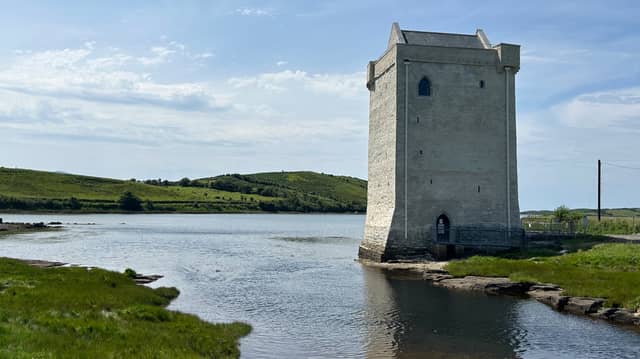

The seven year restoration project should protect the storied castle for the next hundred years
Rockfleet Castle, the fifteenth-century tower house on Clew Bay best known as the home and eventual deathplace of Grace O'Malley, has been the subject of a major Office of Public Works conservation programme since the castle was closed to the public on health and safety grounds in 2019.
According to the OPW, all of the main exterior works at Carrickahowley (Rockfleet) Castle, outside Newport, were finished in May 2025, bringing to a close the first and most visible phase of the project. Attention has now turned to Phase Two, which covers the interior of the tower house. That work is under way, and the OPW expects the installation of replacement internal floors to be finished by the end of August 2026.
The castle, built by the Bourke family and acquired by Grace O'Malley through her marriage to Richard Bourke around 1566, had fallen into a poor state before conservation began.
District works manager Kieran Reid had previously described to The Mayo News how the walls were deteriorating so badly that the building risked collapsing into the sea within decades, and that the recent works have secured its future for the next century.
Much of the physical labour has fallen to the OPW's own craft workers, including stonemason Dominic Fallon. Starting at roof level, his team had to strip out extensive repointing carried out in the 1950s using sand and cement, a mix that had accelerated decay in the surrounding stonework. That damaged stone was removed and replaced before repointing resumed using lime mortar, a traditional material better suited to the building's fabric. The coping stones were cut from limestone sourced in Lecarrow, Co Roscommon, and laid half-lapped so rainwater runs clear of the joints, with brass dowels fixed into the walls to keep the stones from lifting.
The finished exterior includes a lime render, reproducing the protective coating the medieval building would originally have had, along with new drainage pipes and lightning conductors to guard against water damage and strikes.
Much of the delay in reaching this stage stemmed from the castle's exposed coastal position, where salt-laden winds and flooding at high tide complicate maintenance, along with the strict temperature conditions lime render needs to cure properly.
The OPW has also used the project as a training ground, with Reid noting that four different apprentices worked on the castle at various stages, gaining hands-on experience in traditional stonemasonry techniques not often required on modern buildings.
The cost of materials, supplies and specialist technical services associated with the project stands at approximately €489,000 to date.
Once the interior works are complete, the OPW says it intends to reintroduce public access, though this remains subject to health and safety assessments and operational considerations. No definitive timeline has yet been set for reopening, though the OPW has indicated the works will continue to be reviewed for opportunities to allow safe public access as the project progresses.