

Sea captain anchored in Irish history
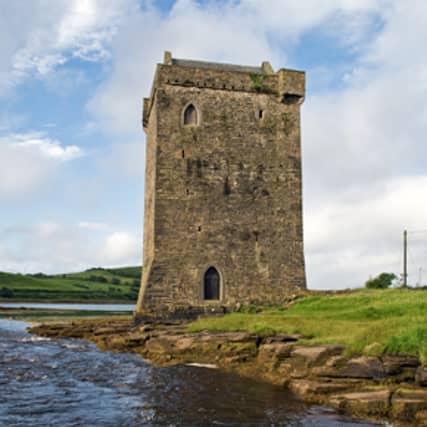

Mayo News reporter Aine Ryan profiles Grace O’Malley and explains how her life was nothing short of incredible.
Anchored in Irish history
Grace O’Malley’s life was an incredible one
Profile
Áine Ryan
FOR almost four hundred years her name echoed in the folk memories of coastal communities along the western seaboard. Her feminist feats of daring and bravery were even captured in the poetic lyricism of 1916 Easter Rising leader, Patrick Pearse: “Oró sé do bheatha bhaile, Oró sé do bheatha bhaile. Oró sé do bheatha bhaile, anois ar theacht on tsamhraidh.”
Ironically, for centuries the epic story of pirate queen Grace O’Malley – Grainne Mhaol, Granuaile – remained moored on the margins of history. Her deserved prominence in history books was subjugated and overshadowed by the male lineage that largely weaves a thread to our past.
However, there are still many monuments peppered around our western coast today that mark Granuaile’s 16th century dominion. There are the castles at Rockfleet and Achill; as well as, of course, the commanding fortress guarding the entrance to Clew Bay outpost, Clare Island. According to local legend, Granuaile slept at night with the rope of her boat tied to her big toe.
Moreover, Clare Island’s renowned Cistercian Abbey is reputedly her burial place and there in the restored abbey, the O’Malley coat of arms – Terra Marique Potens (powerful on land and sea) – still adorns the wall.
After Grace met the Lord Deputy of Ireland in Galway in 1577, Sir Henry Sidney observed: “There came to me a most famous feminine sea captain called Grany Imallye, and offered her services unto me, wheresoever I could command her, with three galleys and 200 fighting men, either in Scotland or Ireland; she brought with her her husband, for she was as well by sea as by land, well more than mrs Mate with him … This was a notorious woman in all the coasts of Ireland.”
Grace O’Malley was born in 1530 in the lordship of Umhall, County Mayo, daughter of chieftain Owen (Dudara) O’Malley, from whom she honed her seafaring skills. Sixteen years later, in a politically arranged match, she was married to the TΡnaiste of the Connemara clan, Donal O’Flaherty.
Ten years later and with two sons and a daughter, she assumed leadership of the clan after Donal was killed. Later, as her reputation as a skilled mariner grew, she returned to Umhall, where she settled on Clare Island for a time.
In 1566 she married Richard-Iron-Bourke and moved her fleet and army to his – less exposed – castle at Rockfleet, situated beside a sheltered inlet near Newport.
The following year she gave birth to their son Tioboid-ne-Long (Toby of the Ships), while aboard one of her ships, and just before she was forced to defend an attack by Barbery pirates.
Over the following decades Grace O’Malley was jailed in Limerick and in the dungeons of Dublin Castle. She was also condemned to death by the English Governor, Sir Richard Bingham and only escaped with her life after her son-in-law led a daring rescue.
After helping the doomed Spanish Armada in 1588, Bingham declared all-out war, accusing her of treason.
Five years later, when Bingham seized her eldest son, Tiboid, Grace made her most daring voyage and sailed to Great Britain and up the Thames to London to put her case to Tudor Queen, Elizabeth 1.
She so impressed the queen that the now ageing mariner is given permission to continue her career by land and sea. It is believed that Grace died at her Rockfleet castle in 1603.
For further information Granuaile. The Life and Times of Grace O’Malley by Anne Chambers (Gill & MacMillan).