

Mayo bee sanctuary harnesses smart hive technology to advance research
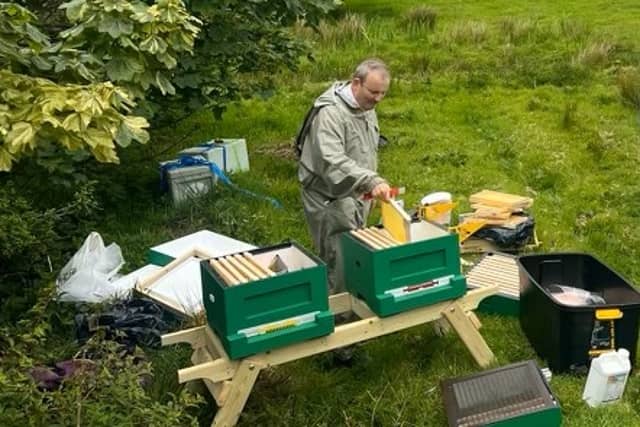

New monitoring initiative combines traditional beekeeping with environmental sensor technology to support conservation, education and biodiversity research
A pioneering new smart hive project, based at the Native Irish Honey Bee Sanctuary on the Inishturk, Co. Mayo aims to deepen scientific understanding of the Native Irish Honey Bee while promoting biodiversity awareness, low-intervention beekeeping and environmental education.
The initiative began earlier this season when two nucleus colonies containing approximately 10,000 native Irish honey bees were introduced to the sanctuary apiary after travelling by ferry.
Positioned overlooking the Atlantic coastline, one of the colonies was fitted with smart hive monitoring technology from BroodMinder from the outset.
The monitoring system gathers environmental and hive data throughout the season, including brood temperature, humidity levels, activity patterns and broader colony trends over time.
Researchers say the information provides valuable insight into hive health while reducing unnecessary disturbance to the bees.
Healthy honey bee colonies maintain brood temperatures at a stable range of around 34–35°C, with changes in temperature or humidity potentially indicating stress, swarming preparation, nectar flow or issues affecting the queen bee. By collecting live data remotely, beekeepers can gain a clearer picture of conditions inside the hive without repeatedly opening it.
A further project is planned next week with the installation of a hive weighing system beneath the monitored colony.
Hive weight is considered one of the strongest indicators of colony health and productivity, increasing when bees gather nectar and produce honey. Researchers hope the data will help reveal how forage conditions influence colony performance over time.
The sanctuary is also using the project to compare bee performance across different environments. The monitored Inishturk colony has a sister nucleus colony in Killadoon, Co. Mayo, with both colonies sourced from the same Native Irish genetic line originating in Connemara. Additional monitoring in Enniskerry, Co. Wicklow, will allow researchers to compare island and mainland conditions.
The project also places a strong emphasis on public engagement and transparency. Students, scientists, beekeepers and members of the public can follow developments online through the BeeCounted Network, while updates are shared through the sanctuary’s website.
The smart hive technology aligns with a lower-intervention approach to beekeeping by reducing disruptions to brood temperature and humidity caused by frequent inspections.
The sanctuary believes long-term monitoring could help strengthen understanding of bee health and environmental pressures, particularly in relation to the varroa mite, widely regarded as one of the greatest threats facing honey bee populations globally.
According to founder Dr. Sean O’Connor, the project extends far beyond honey production.
“The Inishturk project is about more than beekeeping — it’s about building knowledge,” he said.
“By combining traditional beekeeping with smart hive technology, we hope to better understand how the Native Irish Honey Bee responds to environmental pressures, isolation, and changing conditions,” he added. “That knowledge may become an important part of the long-term fight against the varroa mite and the protection of Ireland’s indigenous honey bee.”
By combining technology with traditional practices, the sanctuary hopes the initiative will encourage greater biodiversity awareness and pollinator protection while helping build a deeper understanding of Ireland’s native honey bees across sites in Mayo and Wicklow.