

Mayo TDs warn of “avalanche of evictions” as housing crisis deepens
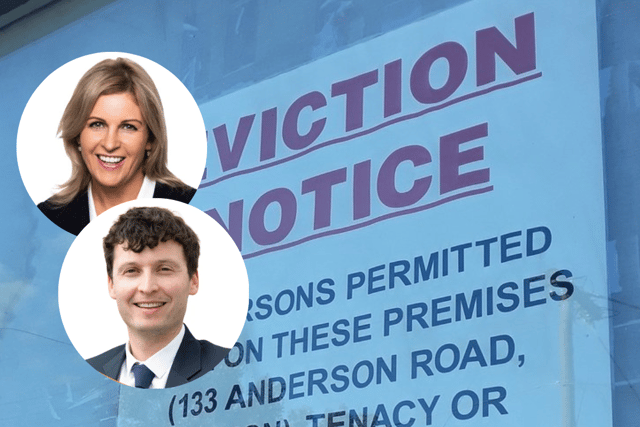

Rose Conway-Walsh and Paul Lawless raise concerns over homelessness, evictions and affordability during heated debate on Government housing policy
A heated Dáil debate on Ireland’s worsening housing crisis saw Mayo representatives warn of growing hardship for renters and families facing eviction.
Opposition TDs accused the Government of failing to address spiralling rents, insecurity in the rental market and rising homelessness.
The debate, initiated by Deputy Eoin Ó Broin, centred on a Sinn Féin motion criticising Government housing policy and calling for emergency measures including a ban on rent increases and no-fault evictions, rent reductions for private tenants and accelerated delivery of social and affordable housing.
Introducing the motion, Deputy Ó Broin cited figures showing more than 7,000 eviction notices were issued between January and March this year, an increase of 51 percent compared with the same period in 2025. He argued that Government policy changes to rental regulations had worsened tenant insecurity and contributed to rising rents and homelessness.
During the debate, Sinn Féin TD Rose Conway-Walsh highlighted the impact of housing pressures in Mayo, pointing to lengthy waiting lists for housing supports and describing what she called a “Government-sponsored housing crisis”.
According to Deputy Conway-Walsh, Mayo currently has 2,664 people on the council housing waiting list, alongside 924 people awaiting support through the Housing Assistance Payment (HAP) and 744 on the Rental Accommodation Scheme (RAS).
“The prolonged Government-sponsored housing crisis is affecting every community in this State, none more so than County Mayo,” she told the Dáil.
Deputy Conway-Walsh also raised the case of a Mayo man in his 70s facing eviction after 21 years in a RAS tenancy. She said the man, who suffers from serious health conditions and relies on a walker, had spent decades on a council waiting list and now faced homelessness.
“I ask the Minister of State what I should tell this man,” she said. “Where should he go and where should the thousands more like him go?”
The Mayo TD urged the Government to consider measures including a ban on no-fault evictions, rent reductions and greater expansion of tenant-in-situ schemes to prevent homelessness.
Meanwhile, Aontú TD Paul Lawless described what he called a “new face of homelessness”, arguing that working families were increasingly being priced out of the private rental market.
Deputy Lawless cited the case of a family from Co. Wicklow whose daughter had recently been diagnosed with leukaemia and who were simultaneously facing eviction.
“This is Ireland in 2026 — too rich for social housing and too poor to survive in the private rental sector,” he said.
“In Mayo, where evictions are spiralling out of control, the social housing support threshold is €30,000. Let us imagine trying to run a household, pay bills, pay rent and run a car on €30,000,” he said. “Once upon a time, homelessness was associated with complex problems like addiction and so on. We are facing a new wave of homelessness and a new face of homelessness. That face is hard-working people.”
The TD argued that many of those seeking help through constituency clinics had never previously relied on social supports and were struggling with rising rents and limited access to housing assistance.
He also criticised changes to rental legislation introduced earlier this year, saying he had warned the Government the measures would accelerate what he described as “the flight of the small landlord” and contribute to rising evictions.
Responding on behalf of the Government, Minister for Housing James Browne rejected claims that the Government housing policy was worsening the crisis, while acknowledging housing remained “the defining social and economic challenge of our time”.
Minister Browne defended the Government’s focus on increasing housing supply and warned that measures such as rent freezes or eviction bans risked reducing long-term rental supply.
“Only a sustained increase in the supply of homes of all tenures can solve this problem,” he said.
The Minister pointed to record levels of housing investment, including more than €9 billion in capital funding for housing in 2026, alongside new rent controls introduced through the Residential Tenancies (Miscellaneous Provisions) Act 2026, which limit rent increases to inflation capped at two percent.
He also highlighted delivery targets under the Government’s housing strategy, including plans for 300,000 homes by 2030, 72,000 social homes and expanded affordable and cost-rental schemes.
However, opposition TDs argued that immediate action is needed to address rising rents, increasing evictions and growing pressure on families unable to secure stable housing.