

Mayo TDs join calls for referendum on neutrality in heated Dáil debate
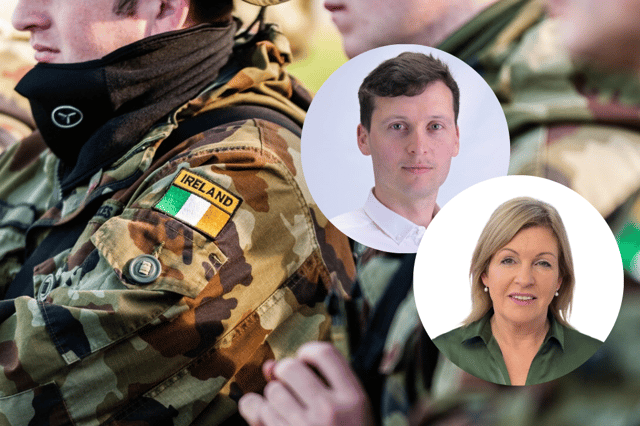

Mayo deputies defend Ireland’s neutrality and triple lock as the Government moves to reform overseas deployment rules for Defence Forces
Mayo TDs clashed with the Government in the Dáil yesterday (Wednesday, May 20) during a heated debate on Irish neutrality and proposals to reform the so-called “triple lock” governing overseas deployment of Defence Forces personnel.
During a Private Members’ motion on Defence and Neutrality, deputies Paul Lawless and Rose Conway-Walsh joined opposition calls for the Government to preserve Ireland’s traditional policy of military neutrality and submit any changes to the public in a referendum.
The debate centred on Government plans to progress the Defence (Amendment) Bill 2025, which would remove the United Nations authorisation requirement from the “triple lock” system governing overseas deployment of Irish troops.
Under the current framework, overseas deployment of Defence Forces personnel generally requires approval from the UN, the Government and Dáil Éireann.
Deputy Lawless argued that neutrality remains a core part of Ireland’s defence and foreign policy and said public support for it remained strong.
“Neutrality and our triple lock is a serious element of our defence and foreign policy,” he told the Dáil. “Irish people widely support our neutrality and are proud of it.”
The Aontú TD accused successive governments of attempting to row back on commitments made during referendums on the Nice and Lisbon treaties, arguing that assurances surrounding neutrality and the triple lock were instrumental in securing public approval.
“Fianna Fáil assured the public in 2009 that the triple lock would be maintained in order to pass the Nice treaty. Assurances were given to the Irish people,” he said.
Deputy Lawless also voiced concern over increasing military spending across Europe and warned against deeper military alignment through EU defence structures.
“If the Minister wants to see the triple lock gone and is so confident the Government has the support of the Irish people, put it to them by means of a referendum,” he said.
Deputy Conway-Walsh described neutrality as “a conscious expression of our independence” and criticised what she called efforts by Government parties to weaken protections around overseas military deployment.
“Our neutrality is not an accident of history,” she said. “It is a conscious expression of our independence, sovereignty and belief that small nations can be a force for peace in the world.”
The Sinn Féin TD argued that Ireland’s neutrality had enhanced the State’s international standing and accused the Government of gradually undermining it.
“The triple lock is central to protecting that neutrality,” she said. “It is a democratic safeguard and a guarantee to the Irish people.”
Deputy Conway-Walsh also renewed criticism of the use of Shannon Airport by the US military, arguing it compromised Ireland’s international reputation as a neutral state.
The debate comes as Irish Defence Forces personnel continue to play a role in overseas peacekeeping operations, including the deployment of five Mayo Defence Forces personnel with the 128th Infantry Battalion in Lebanon, where Irish troops are part of the United Nations Interim Force in Lebanon (UNIFIL).
Responding on behalf of the Government, the Minister for Defence Helen McEntee rejected claims that proposed reforms would undermine neutrality and insisted Ireland’s longstanding policy of military neutrality would remain unchanged.
“Let me be absolutely clear,” Minister McEntee told the Dáil. “Ireland’s long-standing policy in regard to our neutrality remains unchanged. We do not participate in military alliances or mutual defence arrangements.”
The Minister argued that the triple lock is a legislative mechanism rather than a constitutional principle and said reform was necessary because UN Security Council vetoes increasingly prevent Ireland from participating in peacekeeping and humanitarian missions.
She cited the winding down of operations in southern Lebanon and the ending of EU naval mission Operation IRINI as examples of circumstances where Ireland’s ability to participate in missions may be constrained.
“The core objective of the legislative reforms proposed is to strengthen our ability to pursue an independent foreign policy and to allow us to make our own decisions in terms of deploying our own troops,” she said.
Minister McEntee said the Government proposals would retain Dáil and Government approval for overseas deployments while removing reliance on authorisation from permanent members of the UN Security Council.
Opposition TDs, however, maintained that removing the UN component of the triple lock would fundamentally alter Ireland’s traditional neutrality and should only proceed with direct public consent.