

OUTDOOR LIVING: The countryside in bloom

While we might complain about the rain, a thunderstorm can breathe new life into the countryside, awakening its many beautiful gifts.
Outdoor Living
John Shelley
I half woke to a sound as that of the sea, with a rushing, heaving, sighing tide outside my window. Struggling to open my eyes, I looked at the clock; a little after one.
A faint, grey light hung in the sky and a subtly rich and spicy scent – new cut grass, fresh earth and honeysuckle – drifted around the room. I shook the sleep from my head and peered out into the night. The sea was rain, rain such as we see only occasionally. It poured from the heavens in great pulsing waves, turning the drive into a river and filling the low points of the lawn to make a series of miniature lakes.
A flicker of light lent a brief glow to the horizon and a long, lazy, thundering grumble rolled over the hills.
In the morning it had gone, and we had just a few puddles left. Even they were shriveling in the sun. As is always the case after a thunderstorm everything looked bright and clean, greens greener, flowers fresher, even the sky a little more blue. We walked to the lake in good spirits.
Look! Summer boletes, the first of the year. The slugs had found them first, but there should be more of these delicious mushrooms tomorrow. The first ones always seem to appear in the same place, year after year.
And see, there! The swans have brought their young ones off the nest. This is the first time we have seen them. See how the pen places herself between her cygnets and ourselves, so that we can barely get a glimpse. And that jealous cob, with his wings raised in warning, telling us to keep away.
We had worried that the mink might have taken all the ducklings, but there a dozen are feeding in the shallow margin. They flee at our approach, running across the water in a long line with their little heads outstretched and their wings helping them along the way. There are more too, further out.
The rain has brought the little butterwort back to life. The thin soil in which they have their roots had become parched; the single purple flowers had withered, the leaves paled. They had looked dead.
These are strange plants, with roots that serve more to anchor the plant to the ground than they do to provide food. The butterwort likes to dine on insects, which it traps in the sticky glue with which its leaves are coated. I can only marvel at the spontaneity with which it is able to produce flowers to replace those that had suffered during the dry spell.
This is all interesting stuff, but these few weeks of high summer really belong to the wild orchid family. The first of them, the Early purple variety, came to our attention in mid March, as eight-inch tall spires of densely packed purple flowers that decorated even the poorest of grassland. Other species followed, adding their rank to developing legions until now we have more than enough to keep even the most ardent botanist engaged for years.
In a short walk we found greater and lesser twayblade, with their single pair of prominent leaves topped with wisps of pale green flowers, cream-coloured butterfly orchids that will fill the evening air with perfume, and the incredibly lovely marsh orchids that arrange themselves in an assortment of colours, from off-white through pale pink to deep cerise. In some areas, most notably the poor limestone pastures around Lough Carra and, to a lesser extent, Lough Mask, the number and diversity of orchids is extraordinary.
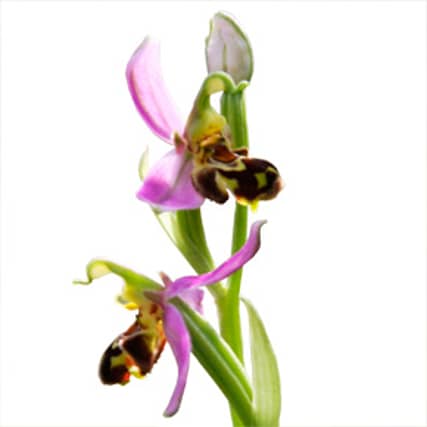
For me, the absolute star of the show is the meticulously fashioned bee orchid, the flowers of which are supposed to bear a resemblance to the female honeybee. As can be seen from the accompanying photograph, the fact that the disguise fools the male bee into trying to mate with the flower says little enough about the discernment of the amorous insect, which nevertheless effects pollination before getting back to its proper business.
The current dearth of honeybees will not help the bee orchid, which is becoming harder to find year by year. The few that appeared last summer were cruelly plucked from the ground and thrown down to decay. Why?
Sunshine after rain, summer skies and a carpet of wildflowers: another perfect morning.