

Mayo County Council urged to reconsider closed railway line for greenway

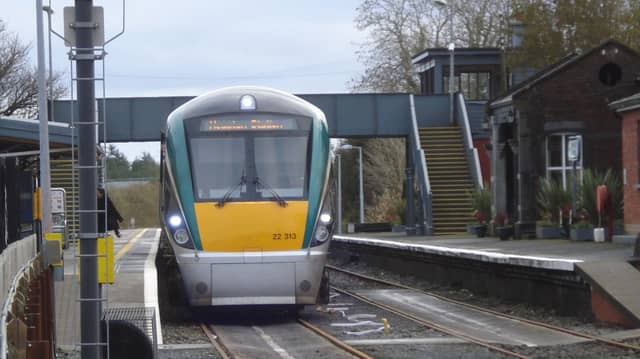

The East Mayo Greenway Group is calling on Mayo County Council to weigh up several points before ruling out a greenway approach for the Claremorris line, including a route closed for half a century and past studies that flagged concerns over the number of crossings.
The East Mayo Greenway Group (EMG) has welcomed a recent decision by Irish Rail to release the closed railway corridor between Bellaghy, near Charlestown, and Collooney, County Sligo, for development as a greenway, under arrangements that would safeguard the route should rail services ever become viable again.
The group is now urging Mayo County Council to reconsider its position on the closed railway line north of Claremorris and to examine whether a similar approach could work for Mayo.
Speaking on behalf of the group, David Malee said the campaign hopes the council will listen to the scale of public support behind the idea. "We hope Mayo County Council will take into account the views of the thousands of people who support the principle of 'Greenway Now, Railway When Possible'," he said.
"More than 26,000 people have signed a petition supporting this approach. It is encouraging to see Sligo County Council, Irish Rail and Transport Infrastructure Ireland working together to advance this project."
Malee added that the wider debate needs to shift away from sentiment and towards what can actually be delivered. "We believe the debate around Greenway versus Railway must move beyond emotion and focus instead on practical realities and the evidence available.
The question is not whether people support rail. The question is what can realistically be delivered in the foreseeable future while protecting this valuable public corridor."
The group said Irish Rail had originally offered to accommodate a greenway at a safe distance from the track, an option it said had been rejected by local representatives. It renewed its call for a "dual solution" and warned that the Youghal precedent showed that once a track is lifted, "it will NEVER be replaced."
The group points out that the new Sligo greenway could be linked at Charlestown to an East Mayo greenway running along the closed railway route, and from there to the Great Western Greenway — creating, it says, a major tourism opportunity across the west and north west that should not be missed.
EMG’s case for a new Greenway:
The group is asking councillors to weigh up several points before ruling out a greenway approach for the Claremorris line:
A route closed for half a century. The railway north of Claremorris shut to both passenger and freight traffic in 1975, meaning it has been out of use for more than 50 years, with significant encroachment occurring along parts of the corridor in that time.
Past studies flagged serious concerns. The 2005 McCann Report, the first government-commissioned study of the Western Rail Corridor, found that reopening the Claremorris to Collooney section would be particularly hard to justify, citing an estimated 290 level and accommodation crossings, the route's original light-railway characteristics, and the cost of upgrading it to modern rail standards.
More rail reviews mean more delay. The All-Island Strategic Rail Review looked at future rail connectivity north of Claremorris towards Sligo, but that review is itself expected to be revisited in the years ahead. EMG argues local communities cannot keep waiting on further review processes before seeing any benefit from the publicly owned corridor.
The existing alignment has major constraints. The same review suggested that any future Galway to Sligo rail connection would likely need new alignments or alternative solutions rather than relying solely on the current corridor, meaning the challenges facing the existing route remain significant even under a future rail scenario.
A greenway keeps the corridor protected. EMG says developing a greenway would keep the route in public ownership and under active management, helping prevent further encroachment on land held by Irish Rail on behalf of the public — and that a greenway under a lease arrangement would not rule out future rail use if that ever became viable.
Council policy already backs this model. The group notes the "Greenway Now, Railway When Possible" approach mirrors Mayo County Council's existing support for the Kiltimagh Velorail project, which runs on a section of closed railway north of Kiltimagh under a fixed-term Irish Rail agreement that can be terminated if the line is needed for rail again. EMG argues the Velorail's track would need to be replaced entirely for any future rail project regardless, showing recreational use can sit alongside long-term protection of the corridor.
The Velorail licence renewal is a test case. With the Velorail's licence due for renewal in 2027, EMG says a further 12-year extension from Irish Rail would send a clear signal that rail reinstatement isn't imminent — and that if a Velorail operation is judged compatible with future rail ambitions, the same logic should apply to a greenway.
Call for a realistic discussion
The East Mayo Greenway Group is calling on advocates of a direct Galway to Sligo railway via Claremorris to examine both the historic assessments and the findings of the All-Island Strategic Rail Review before assuming the existing Claremorris to Collooney alignment remains a realistic option for modern rail development.
The group maintains that a greenway can deliver immediate economic, tourism, health and community benefits while still preserving the public corridor for any future transport needs.
Funded by the Local Democracy Reporting Scheme