

The Irish greyhounds who stole the show in Mayo


Four retired greyhounds recently found themselves in front of the cameras in Mayo — and their performance offered a glimpse of why these gentle dogs are winning over families around the world
For four greyhounds accustomed to the noise and routine of racing kennels, a Mayo film set might seem like an unlikely place to spend a week.
There were cameras, lights, actors, crew and plenty of activity as Failing to Fetch Me, a short film by Irish-American writer-director Joe Kavanagh, was filmed at locations including Aughagower, Rosmoney and Carrowholly.
But according to Orlaith Farrelly of the Irish Retired Greyhound Trust (IRGT), the dogs took it all in their stride.
“It was amazing, actually. It was an amazing experience. Never in my life did I have to do anything like that,” she says. “But the dogs were amazing.”
The four greyhounds had all come through the Trust after their racing careers and were specially selected for the production. Six months of preparation went into getting them ready for a four-day shoot, with the dogs eventually spending time at the Trust’s Irish Adoption Centre in Kildare, where foster carer Tom Wall worked with them.
“They probably don’t get as much notoriety as they should,” says Orlaith.
The dogs had to meet very particular requirements for the film. Not every greyhound was suitable, but the four handpicked proved remarkably adaptable.
Flash (Rathmoylon flash), who played the main canine character, has since been rehomed with a family in Cork. Cash (Coonough Cashout), his stunt double, is due to travel to America. Ria (Epic Flash) has already found a new home in the Czech Republic, while Jade (Wollies Arapho) has been placed in Finland.
Low maintenance dogs
Their ability to cope with the unfamiliar surroundings also highlighted something Orlaith believes many people misunderstand about greyhounds.
“They’re very, very lazy,” she laughs. “They require very little exercise in terms of as a breed.”
The image most people have of a greyhound is one of extraordinary speed — a racing dog hurtling around a track, often wearing a muzzle. Away from that environment, however, Orlaith says, a very different personality emerges.
“They are anything but” high-energy, she says. “They’re couch potatoes.”
Greyhounds are highly intelligent but naturally relaxed dogs, she explains, making them increasingly popular as pets, particularly in continental Europe. They can adapt well to apartment living and to households ranging from young families to retired couples.
“They fit into your lifestyle, rather than you fitting into their lifestyle,” says Orlaith.
That adaptability was obvious on the Mayo set. The dogs were exposed to lights, noise, people and the general commotion of filming, yet remained calm. By the third and fourth days, they were even beginning to show the attitude of any worker who has had enough.
“They were so good, so chilled, so calm. And we asked everything of them, and, you know, they gave more,” says Orlaith.
The experience also provided an unexpected opportunity to introduce more than 100 people on the set to the reality of retired greyhounds.
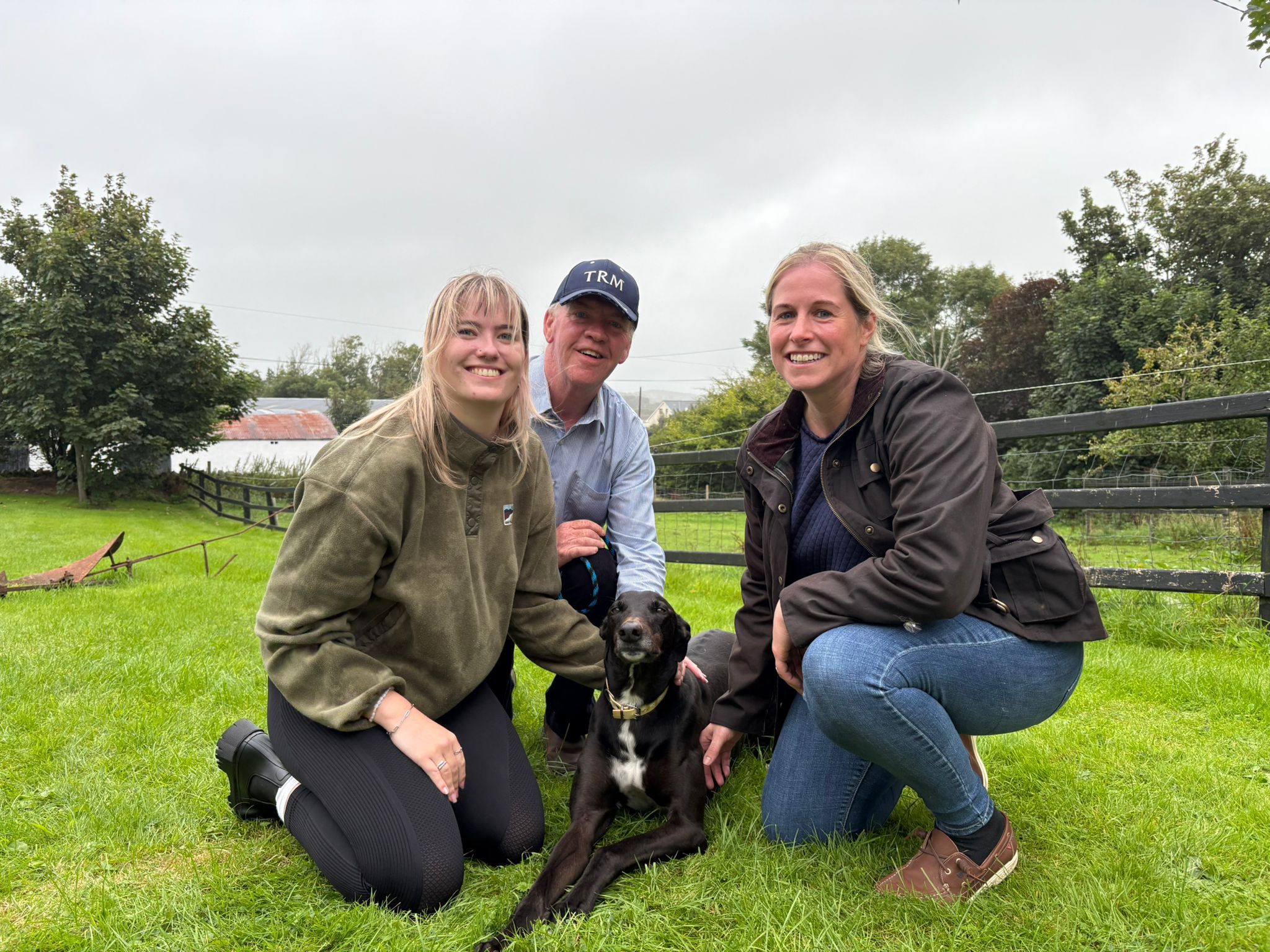
The Irish Retired Greyhound Trust
For the IRGT, that is central to its work. Established in 1967, the Trust’s main aim is to promote greyhounds as domestic pets and help dogs make the transition from racing to retirement. Every greyhound entering its care is neutered, fully vaccinated and provided with a pet passport. Any pre-existing injury is assessed and disclosed to prospective adopters.
When a dog finishes racing, its owner or trainer can place it on the Trust’s rehoming list. Once a space becomes available at a foster centre, the greyhound begins the next stage of its journey.
Foster carers assess the dog’s temperament and how it responds to roads, noise and other animals, while also considering what type of home would suit it best.
Some greyhounds can live happily with cats; others may require a more carefully matched household. The goal is to find the right fit rather than simply the quickest home.
There is growing interest locally too. Orlaith says the Trust has seen a “huge increase of interest” in Mayo and the wider West, although there is currently no dedicated foster centre in the county.
This year, the Trust is heading towards 500 adoptions through its centres, with the final number expected to be higher when dogs rehomed with the support of other Irish organisations are included.
For prospective owners, the process begins with an application and home check, followed by a meeting with suitable dogs. And according to Orlaith, there is one simple rule.
“The greyhound will always pick you.”
For her, seeing the dogs progress from puppyhood, through racing and eventually into family life makes the work especially rewarding.
“It’s a beautiful circle,” she says.
And perhaps the four greyhounds who recently found themselves under the lights in Mayo have demonstrated that better than most: after a life built around speed, their next act is often remarkably simple — finding a comfortable sofa and someone to share it with.
More info
For anyone interested in adopting a retired greyhound, the Irish Retired Greyhound Trust provides information and support through its rehoming programme.