

Clew Bay’s Seaweed future hangs in the balance
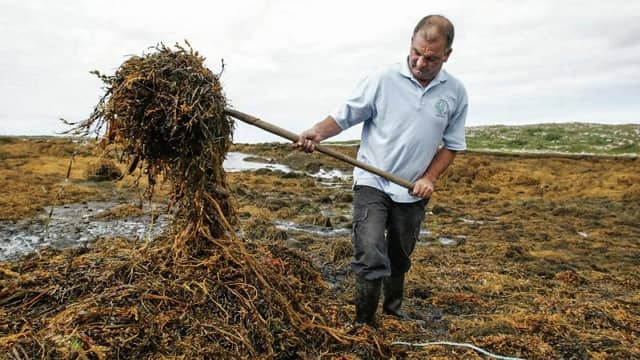

MARA says it is pausing active consideration of seaweed harvesting applications until 2027 as Government examines rules governing Ireland’s wild seaweed resource
The future of commercial seaweed harvesting in Clew Bay is unlikely to be decided until next year, with the Maritime Area Regulatory Authority (MARA) confirming that it expects to resume active consideration of seaweed licence applications in early 2027.
The development comes as the regulator works through a backlog of applications and examines a number of unresolved legal, environmental and regulatory issues surrounding wild seaweed harvesting.
At the centre of the debate in Mayo is a long-running application by Kerry-based biotechnology company BioAtlantis to harvest up to 11,018 tonnes of Ascophyllum nodosum — commonly known as knotted wrack or egg wrack — annually in Clew Bay.
The application, which dates back to 2014 under the former foreshore licensing system, was transferred to MARA following the introduction of the Maritime Area Planning Act. It is now listed as Maritime Usage Licence application MUL240043.
BioAtlantis says the proposed harvest would be carried out using traditional hand-harvesting methods and that the annual figure is based on scientific surveys.
“Harvesting will be undertaken using existing traditional hand harvesting methods,” a representative of BioAtlantis told The Mayo News. “A. nodosum is a renewable resource that regenerates following hand harvesting, within 11–17 months in the west of Ireland, as documented by Marine Institute research. The harvesting regime allows sufficient time for regeneration before harvesting again, ensuring long-term sustainability of the resource.”
The company also says the proposal excludes areas where existing seaweed rights have been identified and includes measures intended to protect habitats, wildlife and the long-term sustainability of the resource.
“BioAtlantis will not harvest in areas with Appurtenant rights without the owner's permission, and where Profit-à-Prendre rights are registered, harvesting plans will be adjusted to allow those individuals to continue to harvest,” BioAtlantis said.
However, the scale of the proposal has generated strong opposition among some traditional harvesters, coastal communities and public representatives, who have raised concerns about the impact on existing harvesting activity, traditional rights and the marine environment.
Halted assessment until 2027
The latest development comes in a letter from MARA dated August 14, in which the authority outlined why progress on seaweed applications has been slower than anticipated.
MARA said it currently has 13 seaweed harvesting applications on hand.
Due to capacity issues and the lack of guidelines, the authority has been prioritising projects classified as Critical State Infrastructure, including offshore renewable energy developments, while also working to clear the wider licensing backlog that arose when MARA began operating.
But the regulator said seaweed harvesting presents a number of additional challenges that must be addressed before applications can be assessed consistently.
These include establishing reliable biomass baselines, identifying suitable harvesting areas, developing monitoring mechanisms to ensure sustainable harvesting, and assessing potential impacts on protected species and habitats.
MARA is also examining the relationship between existing property and seaweed harvesting rights and the new Maritime Usage Licence system.
That question is particularly significant along the Mayo coast, where seaweed has been harvested by coastal families for generations.
While some harvesting rights are formally recorded, others may be based on historic rights or long-established local practices. Establishing and documenting those rights has become one of the most contentious aspects of the new licensing system.
The issue has been examined by the Joint Oireachtas Committee on Fisheries and Maritime Affairs, which heard evidence on seaweed harvesting in April and again in July.
At the July meeting, the Department of Climate, Energy and the Environment officials confirmed that the regulatory framework for wild seaweed harvesting is being examined, with consultation with relevant stakeholders expected.
The Joint Committee was also told that MARA had not prioritised the application, and its assessment had been paused, due to capacity issues within the organisation as well as a need for clearer policy guidance before it can make consistent decisions on seaweed applications.
The Government’s new marine planning policy statement proposes the development of an appropriate regulatory framework for seaweed harvesting, alongside policies aimed at protecting key seaweed species and coastal communities.
A valuable resource
The debate comes at a time when seaweed is becoming an increasingly valuable raw material.
It is used in a growing range of industries, including agriculture, food, cosmetics and biotechnology, while Irish companies are developing seaweed-derived products for areas including soil health, animal health and plant health.
BioAtlantis argues that Ireland has significant untapped potential for sustainable harvesting and that greater access to Irish seaweed could support jobs, investment, research and manufacturing domestically.
“Ireland has substantial unutilised renewable harvest potential. Ireland has an estimated sustainable annual harvest of approx. 74,000-75,000 wet tonnes of A. nodosum, while only approx. 30,000 tonnes are currently harvested each year,” BioAtlantis shared with The Mayo News.
The company says it has been forced to import seaweed from countries including Iceland and Norway since its Irish supply became unavailable.
It argues that Ireland should be processing and adding value to its own natural resources rather than exporting raw seaweed while Irish companies import material from overseas.
“The company has since had to import seaweed from countries such as Iceland and Norway as sufficient supply cannot be sourced in Ireland, despite Ireland having a significant unutilised renewable harvest potential,” BioAtlantis explained.
BioAtlantis maintains that its Clew Bay proposal would respect existing legal rights and says traditional harvesters could play an important role in supplying the company.
Opponents, however, argue that the economic potential of the resource cannot be considered separately from the people who have traditionally depended on it or the ecosystems in which it grows.
Clew Bay forms part of the Clew Bay Complex Special Area of Conservation, adding another layer to the assessment of any large-scale harvesting proposal.
The environmental question is therefore not simply how much seaweed exists, but how much can be removed, from where, how often and what impact that harvesting could have on the wider coastal ecosystem.
A deadline for traditional harvesters
There is also a significant deadline approaching for those who have traditionally harvested wild seaweed.
Under transitional arrangements introduced through the Maritime Area Planning legislation, people who were actively harvesting wild seaweed before August 2021 and who do not already have an authorisation can apply for a MARA licence.
The deadline for those applications is July 31, 2028.
For traditional harvesters, that creates a pressing question over how easily generations of local knowledge and activity can be translated into the documentation required by a modern licensing system.
After this deadline, traditional or customary rights alone will no longer grant legal permission to harvest wild seaweed. Anyone harvesting without an authorized MARA license after this date can face state enforcement proceedings for unauthorized maritime usage.
That creates a race of sorts: policymakers are developing a modern regulatory system for a growing seaweed industry, while traditional harvesters are being asked to navigate that new system and establish their position within it.
For companies such as BioAtlantis, there is an equally pressing question about securing the raw material needed to invest and grow.
And for Clew Bay, the central question is perhaps the simplest: how can a resource that has supported coastal communities for generations be developed as an economic opportunity without losing sight of the people, traditions and environment that make it valuable in the first place?
A decision yet to come
MARA has said it expects to clear most Critical State Infrastructure applications and other applications currently in its backlog by the end of this year.
It then expects to resume active consideration of seaweed-related applications in early 2027.
The BioAtlantis application has therefore not been rejected, but neither has it been approved.
When MARA returns to the seaweed applications in early 2027, however, the decisions it makes could help determine not only the future of harvesting in Clew Bay, but how Ireland manages its wild seaweed resource for years to come.