

Marine Institute marks 70 years of Newport research facility in Mayo
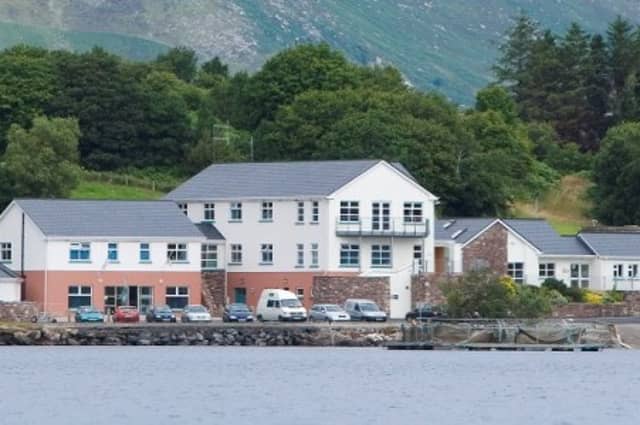

Burrishoole centre celebrates seven decades of scientific discovery shaping fisheries, climate research and conservation
The Marine Institute is celebrating 70 years of its Newport Research Facility in Burrishoole, recognising the site as one of Ireland’s longest-running scientific research stations.
Located between Lough Feeagh and Lough Furnace beneath the Nephin Beg mountains, the facility was originally established in 1955 as the Salmon Research Trust of Ireland under the patronage of Sir Hugh Beaver in partnership with the Department of Lands.
Over seven decades, scientists at Newport have built internationally recognised datasets that influence EU fisheries quotas, support climate policy and help guide environmental conservation and restoration efforts.
“The Newport Research Facility is one of Ireland’s great scientific centres,” said Rick Officer, CEO of the Marine Institute.
“Its global reputation is built not only on the uniqueness of the long-term datasets it has produced, but on the generations of leading scientists and staff who have dedicated their careers to this place.”
The facility is internationally recognised for its long-term fish monitoring systems, including the Salmon Leap Trap and Mill Race Trap, which have continuously tracked salmon, sea trout and eel movements since 1970.
Scientists say the uninterrupted combination of biological and environmental data collected across the Burrishoole catchment is among the rarest of its kind globally.
Director of Fisheries and Ecosystems Advisory Services, Dr Ciaran Kelly described Newport’s “legacy of unbroken biological and environmental data” as globally unique, adding that researchers are now building on that foundation to advance aquaculture innovation and nature restoration.
The research centre also operates freshwater fish rearing facilities and a modern recirculation aquaculture system to support scientific studies, including long-running salmon ranching programmes used to examine fish genetics, survival and stock sustainability.
In recent years, Newport researchers have expanded work into marine telemetry, using advanced tracking technologies to monitor species including bluefin tuna, basking sharks, skates and rays to better understand behaviour and ecosystem resilience.
Beyond fisheries, the Mayo facility has become a vital centre for climate science. Long-term weather and lake monitoring records at Lough Feeagh are regarded among the longest continuous freshwater temperature datasets in the world, helping scientists understand the effects of climate change on aquatic ecosystems.
A monitoring buoy installed at Lough Furnace in 2025 now forms part of the Marine Institute’s national Sentinel Site network, gathering long-term environmental data to support marine policy and climate action.
Research carried out at Newport has also informed conservation efforts, including restoration work in the Burrishoole catchment and initiatives to protect endangered species such as Ireland’s freshwater pearl mussel.
Since 2020, a joint breeding programme between the Marine Institute and the National Parks and Wildlife Service has been based at Newport, achieving a milestone in 2025 when scientists successfully bred juvenile freshwater pearl mussels in captivity.
Section Manager at the Newport Research Facility, Dr Russell Poole, said the facility remains committed to delivering science that supports fisheries management, climate action and biodiversity protection.
“Research carried out here over 70 years has fundamentally shaped fisheries management, aquaculture development, and our response to climate change,” he said.
Alongside scientific research, the Newport facility continues to host school visits, public outreach events, research partnerships and bursary programmes aimed at supporting the next generation of Irish marine scientists.