

Westport man helps unlock 30 years of TG4 history for future generations
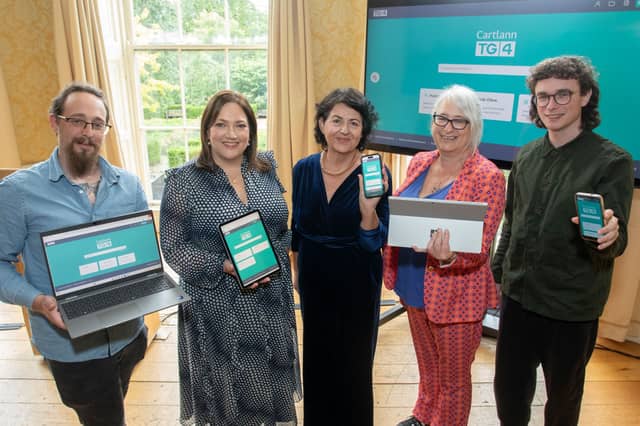

New Cartlann TG4 archive gives researchers and the public access to thousands of programmes documenting Irish life, language and culture
For generations, archives were places of dusty boxes, shelves of videotapes and forgotten recordings. Today, they are increasingly digital gateways to the past.
A new online archive launched by TG4 is doing exactly that — opening a window onto three decades of Irish-language broadcasting and allowing users to step back in time through thousands of hours of television history.
As part of this project is Westport native Ristéard Ó hAodha, who has spent the last three years helping to build Cartlann TG4, a new digital research archive that makes a vast collection of TG4 programmes accessible to researchers, students, filmmakers and the public.
Launched at the Museum of Literature Ireland (MoLI) in Dublin earlier this month, Cartlann TG4 arrives as the Irish-language broadcaster prepares to celebrate its thirtieth anniversary in October.
The project has involved digitising and cataloguing material that dates back to TG4's launch in 1996. Much of the broadcaster's early output existed only on videotapes stored in physical archives.
The archive already provides access to more than 9,000 programmes, with thousands more set to be added in the coming years.
For Ristéard Ó hAodha, who developed the archive website, the project sits at the intersection of technology, heritage and memory.
“My role was to build the website and develop the systems that allow people to search and access the archive,” he explained.
“We wanted to create something specifically designed for Irish-language research. Search engines generally don't understand Irish names, place names or surnames in the same way they understand English. We wanted a system that recognised those connections and made material easier to find.”
The archive contains material spanning news, current affairs, sport, music, entertainment and community life, documenting Ireland's social and cultural history through the medium of Irish since TG4 first went on air in 1996.
“It is really about making this material available to the public,” Ristéard said. “TG4 is a public-service broadcaster and there has always been a desire to find ways of making the archive accessible while also respecting copyright. This archive is a way of doing that.”
While TG4 has broadcast more than 50,000 hours of programming over the past three decades, much of that content was previously difficult to access. Cartlann TG4 aims to change that.
For Ristéard, who learned Irish during the Covid-19 pandemic before moving to Connemara and beginning a career through the language, working on the archive has been an unexpected journey.
“If someone had told me six years ago that I'd be building a digital archive for TG4, I wouldn't have believed them,” he said. “I learned Irish relatively recently and wanted to work through the language. That eventually led me to TG4 and then to this project.”
One of the aspects he values most is how TG4 has documented rural Ireland.
“TG4 has always given a platform to smaller communities that often don't appear elsewhere,” Ristéard said. “You can search for a tiny townland in Mayo, Donegal or Kerry and find programmes, interviews and stories connected to that place. That's a huge cultural resource.”
That local connection is particularly evident in Mayo. Communities across the county — from Westport and Achill to the Mayo Gaeltacht — feature extensively throughout TG4's coverage over the years.
For researchers, family historians and anyone curious about the past, the archive can provide unexpected discoveries. Ristéard admits there have been personal discoveries too.
“I even found a clip of myself, my sisters and my mother from Croagh Patrick in 2006,” he laughed. “I didn't know many words of Irish back then.”
As digitisation continues, the archive is expected to grow steadily, eventually incorporating material from TG4's entire broadcasting history and future programming as it is produced.
“It really is a living archive,” Ó hAodha said. “The goal is that future generations can explore Ireland's history, language and culture through the stories that were captured on screen.”
“It tells the story of Ireland over the past 30 years,” he added. "It preserves voices, communities and memories that might otherwise disappear. That's what makes it special."
For anyone curious about the past, Cartlann TG4 offers a new way to revisit it — one programme at a time – and perhaps see Ireland through fresh eyes.