

HEALTH: Osteoporisis Part 1

In the first article in a three-part series on osteoporosis, Sabine Hiller looks at the causes of this common condition.
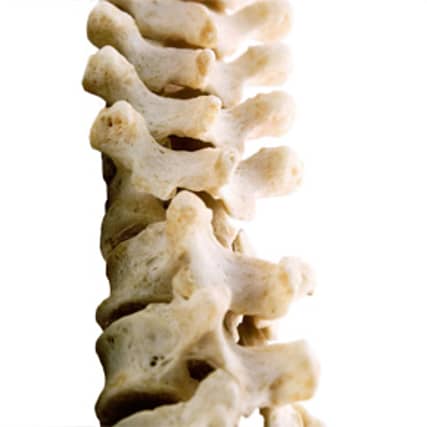
Osteoporosis often affects the spine
Look after your internal scaffolding
Herbal Medicine
Sabine Hiller
Osteoporosis – Part 1
‘I can feel it in my bones’, ‘bone idle’, ‘I have a bone to pick with you’, ‘bone dry’, ‘bone of contention’…We frequently refer to bones in our everyday language, but do we look after them? If we don’t, we may be faced with the debilitating condition that is osteoporosis in later life.
Osteoporosis literally means ‘porous bones’, and it occurs when bone is broken down faster than it is being rebuilt. While less common in men, it affects one in four post-menopausal women.
The risk factors include:
> Increasing age
> Premature menopause and post-menopause
> Moderate alcohol intake (heavy drinking is even worse!)
> Smoking
> Sedentary lifestyle
> Poor diet
> Long-term use of corticosteroids, heparin or anticonvulsants
> Conditions such as hyperparathyroidism and hyperthyroidism
> Family history of osteoporosis
> Being of small stature with small bones, or extremely lean
Osteoporosis often affects the spine, hips and ribs. As these bones bear a great deal of weight, once they are weakened they are extremely susceptible to fracture.
So what are bones? Bones consist of a protein framework that gives bone its ‘tensile strength’ (the strength to endure stretching forces). Mineral salts – mainly calcium, phosphorus and magnesium – are crystallised into this framework, giving bone its hard texture, a bit like combining steel with concrete.
As a dynamic, living tissue, healthy bone is constantly being broken down and rebuilt. Not surprisingly, this means we need to supply calcium, phosphorus, magnesium and protein as well as many other nutrients to keep the building site going.
Protein deficiency in healthy adults in Europe is very uncommon. Phosphorus, meanwhile, is naturally present in many foods, and unless you suffer from alcoholism, kidney disease or malabsorption, deficiency is rare. In fact, most people in Ireland get too much phosphorus due to the high consumption of meat, soft-drinks and food preservatives, which can upset the balance between phosphorus and calcium.
Calcium from your diet needs to be absorbed. That sounds easy enough, but a lot depends on whether you are producing enough stomach acid. As we get older, we tend to produce less stomach acid – making some forms of calcium harder to absorb.
Many people do not have enough magnesium on their plates. And as both soft-drinks and excess calcium prevent your body from taking up magnesium, it’s an issue worth looking at. A mainly vegetarian diet with loads of green vegetables and seeds will go a long way.
There are many other nutritional and hormonal factors involved in the remodelling of bone. The main vitamin associated with bone health is vitamin D, which is essential for incorporating minerals into the bone matrix. But osteoporosis sufferers often have lower levels of the active forms of Vitamin D – they seem to have a problem converting less-active compounds into more-active ones.
Theories about the causes of this impaired ability to convert less-active Vitamin D have highlighted links to oestrogen and magnesium deficiency. As part of the recycling of bone, the parathyroid hormone activates osteoclasts (bone cells that break down the bone) – vital when there is not enough calcium circulating in your blood. However, oestrogen deficiency makes osteoclasts more sensitive to parathyroid hormone, which means too much bone gets broken down.
So what can you do? Not all of the risk factors, such as your age, your family history or your stature, are under your control, but many others are. You can do a lot to decrease your chances of developing osteoporosis, or, if you are already suffering from it, to slow its progress.
> Next time?Lifestyle changes that can help avoid or slow osteoporosis.