Denis O’Donovan of Ballyryan, Donohill, Co Tipperary
Search


12 Mar 2026

Please allow ads as they help fund our trusted local news content.
Kindly add us to your ad blocker whitelist.
If you want further access to Ireland's best local journalism, consider contributing and/or subscribing to our free daily Newsletter .
Support our mission and join our community now.
To continue reading this article, you can subscribe for as little as €0.50 per week which will also give you access to all of our premium content and archived articles!
Alternatively, you can pay €0.50 per article, capped at €1 per day.
Thank you for supporting Ireland's best local journalism!

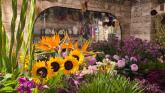
Sunflower Power: Pupils from Holy Trinity National School in Westport are heading to the Stripe Primary Science Fair at the RDS this Friday.

What began as a small pack of sunflower seeds has grown into a project that now has pupils from Holy Trinity National School in Westport heading to the prestigious Stripe Primary Science Fair at the RDS this Friday.
Originally intended as a simple pollinator project, the seeds were supplied through Biodiversity in Schools to encourage bees and butterflies by providing nectar and pollen. But when pupils returned to school after the summer holidays, they were met with a surprise.
“By the time we came back in September, the sunflowers were bigger than the kids,” said teacher Meriel Donaghy, who led the project with fifth and sixth class pupils.
From that moment, the plants became the centre of a wide-ranging learning experience that stretched far beyond the original plan. As the children began closely observing the flowers, they noticed spiral patterns in the seed heads. Further investigation led them to discover the Fibonacci sequence, turning the project into an unexpected maths exploration.
“It’s one of those projects that just extended and extended, kind of like the seeds themselves,” Donaghy said. “It became a springboard into a multitude of different things.”
READ MORE: Ring doorbell captures surprising moment as flock of sheep visits Mayo home
When the plants died back in autumn, the class harvested the seed heads and discovered some contained up to 2,000 seeds. The pupils counted, weighed and measured them, developing a real sense of what large numbers actually look like.
“Counting the seeds was crazy,” Donaghy said. “Suddenly they could really see what a hundred looks like, what a thousand looks like. They were learning visually and were genuinely excited.”
The learning was not limited to numbers. The pupils explored the role of pollinators, studied plant anatomy, and even connected the project to art by drawing and painting sunflowers, inspired by Vincent van Gogh. They also examined the many uses of sunflower seeds, feeding birds, sampling them themselves and replanting others for future growth.
“They made bird feeders with the seeds and now the birds are coming right up to the classroom window,” Donaghy said. “It’s great.”
Hands-on exploration proved especially engaging for the children. Dissecting the plants allowed them to experience the textures, smells and sticky sap of the sunflowers, sparking curiosity and enthusiasm.
“The handling and dissection really captured them,” Donaghy said. “Some of them even asked if they could bring pieces home because they did not want to throw the sunflowers in the trash.”
She described the students’ response as “like an awakening,” with questions multiplying as their learning deepened.
“The more they learned, the more they wanted to know. They kept wondering and wondering,” she said.
Beyond scientific knowledge, the project also helped develop communication, teamwork and confidence as pupils worked in pairs and created posters to present their findings, and their sunflowers.
“They’re seeing all their learning come together,” Donaghy said. “[Sunflowers] have actually growing again on the windowsill, so we’re going to bring our second generation with us.”
This Friday, the class will travel to Dublin to present their project, titled Sunflower Power, at the Primary Science Fair, the junior section of the Stripe Young Scientist & Technology Exhibition. While the event is an exhibition rather than a competition, excitement levels are high.
“They’re excited, but also a little worried about the early start,” Donaghy said. “They’re very happy with what they’ve achieved and the work they’ve done.”
Donaghy believes the project stands out because it demonstrates how science connects to everyday life.
“The original goal was simply to learn about pollination and feed the bees,” she said. “It shows that science is in everything.”
As a teacher, she says the experience has been equally rewarding.
“I’ve learned a lot about the students themselves through this project,” she said.
From a single packet of seeds to a national science stage, and even a second generation of sunflowers now growing on the classroom windowsill, the project has proved that sometimes the simplest ideas can yield the richest learning.

Subscribe or register today to discover more from DonegalLive.ie
Buy the e-paper of the Donegal Democrat, Donegal People's Press, Donegal Post and Inish Times here for instant access to Donegal's premier news titles.
Keep up with the latest news from Donegal with our daily newsletter featuring the most important stories of the day delivered to your inbox every evening at 5pm.

This publication supports the work of the Press Council of Ireland and Office of the Press Ombudsman, and our staff operate within the Code of Practice of the Press Council. You can obtain a copy of the Code, or contact the Council, at www.presscouncil.ie, Lo-call 1800 208 080 or email: info@presscouncil.ie.