

Mayo to save Ash trees through groundbreaking citizen science project
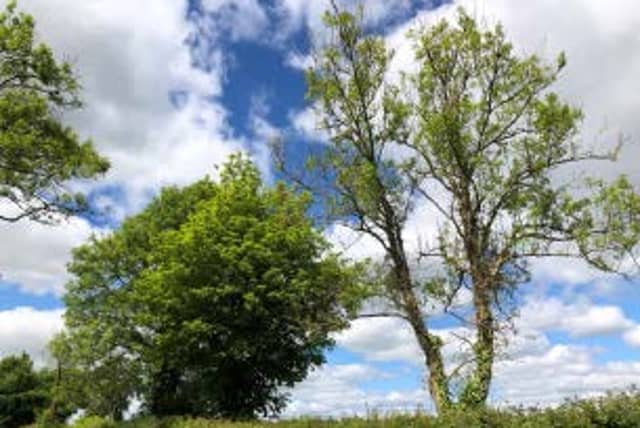

A new partnership between Mayo County Council, UCD, Teagasc and Balla CRD aims to restore one of Ireland’s most threatened native species
Mayo residents are invited to play a vital role in protecting one of Ireland’s native trees as Mayo County Council, in partnership with UCD, Teagasc and Balla Community Resource Development (CRD), launches an innovative citizen science project to combat the effects of Ash dieback.
Ash dieback is caused by the invasive fungal disease Hymenoscyphus fraxineus. It has spread throughout Ireland over the past decade and is now present in every county where Ash trees grow. The disease is regarded as the greatest threat to the survival of European Ash trees.
The new ‘Ash for Future’ initiative aims to identify the small number of healthy Ash trees believed to show natural resistance to the disease. Researchers estimate that up to five percent of Ash trees may possess this valuable tolerance, offering hope for the species’ future.
As part of the project, staff and students from UCD’s Schools of Geography and Architecture, Planning and Environmental Policy visited Balla on Monday, June 22 to survey local woodlands using drones equipped with high-resolution, multi-spectral and thermal imaging technology.
The imagery will support teaching and research and will also help pinpoint healthy Ash trees that have survived the disease.
Once identified, cuttings from these trees will be collected through Teagasc’s national ‘Ash for Future’ research programme and grown in a specialist nursery to establish a disease-tolerant gene bank.
The long-term goal is to produce healthy young Ash trees that can eventually be replanted across Ireland.
Sophia Meeres of UCD said the partnership with Mayo County Council would be invaluable in encouraging public participation.
“It is so valuable for Teagasc to have the assistance of a local authority in promoting the project and the partnership with Mayo County Council should help boost its success,” she said.
Peter Gill, Parks Superintendent with Mayo County Council, said the project offers local people the opportunity to contribute to innovative environmental research.
“Potentially, within five years, healthy young trees can be returned to Mayo parks as part of the research,” he said.
The success of the project now depends on the public. Mayo County Council is asking residents to report healthy-looking Ash trees that appear unaffected by Ash dieback.
An online survey has been created to allow members of the public to submit details of healthy Ash trees, helping researchers build a stronger understanding of the disease and support the restoration of native Ash trees.