

Mayo recognised among world’s top 100 geological heritage sites
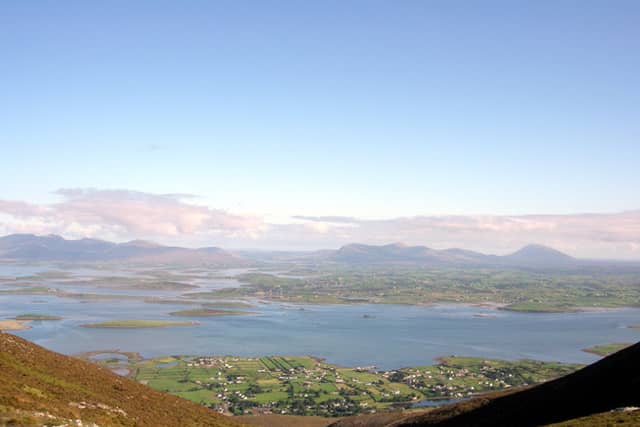

The area, spanning 4,000 square kilometres between Clew Bay and Galway Bay, is now part of a prestigious international collection of geological locations, including Mount Fuji in Japan and the Norwegian Fjords.
An area stretching from Clew Bay to Galway Bay has received international recognition after being named among the Third 100 Global Geological Heritage Sites by the International Union of Geological Sciences (IUGS).
Known as the Grampian-Taconic Orogeny transect in Connemara and Mayo, the site covers approximately 4,000 square kilometres between the two bays, extending west of Lough Mask and Lough Corrib.
The designation recognises the area's exceptional Geodiversity (range of different types of rock) and its importance in understanding the geological history of Ireland and the wider world.
The region contains one of the most complete and accessible records of the opening and closing of the ancient Iapetus Ocean, which separated the northern and southern halves of Ireland until around 400 million years ago.
Its rocks also preserve evidence of the formation of ancient mountain ranges, created through the tectonic processes associated with the closure of the ocean.
A large part of the newly recognised area falls within the Joyce Country and Western Lakes region, which achieved UNESCO Global Geopark status in April 2026.
Among the best-known geological features of the area is world-famous Connemara Marble. However, the region is also home to a wide variety of other rock types, including granite, volcanic rocks and quartzite. The latter, one of the hardest naturally occurring rocks, forms the distinctive peaks of the Twelve Bens and Maumturks mountain ranges.
The area has attracted geological research for more than 200 years and gained international prominence during the 1960s, when the emerging science of plate tectonics transformed understanding of ancient mountain-building processes.
Today, the site and the associated UNESCO Global Geopark are ideal locations for outdoor education and state-of-the-art research.
Geopark geologist Dr Benjamin Thébaudeau, who attended the IUGS conference in Portugal, welcomed the international recognition.
“This IUGS listing of the wider region highlights the work of generations of geologists and recognises it as one of the best sites in the world to explore, study and research geology,” he said.
“It really puts us on the map, and will attract more education groups of all ages to study and learn.”
The Third 100 selection builds on the success of the initiative's first two announcements, made in 2022 and 2024.
Connemara and Mayo now join a prestigious international collection of geological locations, including Mount Fuji in Japan, the Norwegian Fjords, the San Andreas Fault in the United States and Mount Aconcagua in Argentina.