

Mayo oyster producer says Class A water cannot be taken for granted


Hugh O'Malley of Achill Oysters says it is important for the image of the island that the waters around Achill hold onto its Class A status
The Class A status of the water around Achill cannot be taken for granted and needs to be protected in order to enhance the status of the Mayo island according to a local oyster producer.
Last week, the Sea Fisheries Protection Authority (SFPA) published the results of a comprehensive Sanitary Survey for the waters in Achill South to meet EU legislative requirements relating to the classification of shellfish production areas.
While the area continues to have Class A status, the report identified that the predominant sources of faecal pollution were attributed to the widespread use of domestic septic tank systems and the extensive agricultural activity in the catchment, particularly sheep farming.
Class A is the highest microbiological safety classification awarded to shellfish production and harvesting areas and the waters around Achill are some of the few areas around Ireland which continue to meet that classification.
Hugh O'Malley of Achill Oysters which operates a production area in Achill North told The Mayo News that having a Class A status allows their oysters to be exported to markets around the world and holding onto it is very important.
“We do not have the same problems some companies in other areas have because our water is so clean,” he said.
“I can only speak for Achill North and my own production area but we are still Class A and we been given the highest level to try to get into the North American market because there is nowhere like Achill in the country and it is something we have to take care of.
“We are seen as being something special and something clean and pure. When I went and tested the Achill Oysters brand name, Achill was such an important feature of our brand and the cleanliness of it is not to be understated.
“We take it for granted we can go to down to the shore and pick black shells and throw them in a pot and eat them. That is not possible in a lot of other communities around the country and it is really important that we hold onto our Blue Flags and clean beaches and our Class A waters. It tells a story about Achill that alligns with everything that we are,” he said.
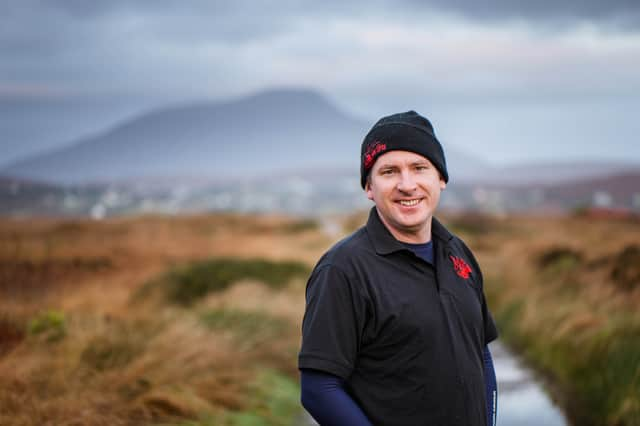
Hugh explained that his production area experienced elevated results in e-coli and these elevated levels are a matter of concern for the aquaculture community. He said they worked closely with the SFPA to try to identify the source and while they were not able to do so, he feels it is important that these warnings are not ignored.
“We work really hard to ensure all the oysters are purified before they get on the local, national or global market but first things first we need to ensure that our own waters are kept clean.
“At a local level the SFPA work closely with us to identify areas where there may be a possibility of pollution and if we have any knowledge to try and help mitigate it. Every production area is tested on a monthly basis as a producer I would test pre and post declaraction oysters for e-coli levels. It is really ecoli levels that bothers us.
“Just because we are still Class A it is not a good enough reason not to go back and investigate why we had spikes but we haven't been able to closely identify it. We hope with the help of the community we may get some more of the answers and when we do get the answers we are then able to give solutions. All we want is clean water around Achill which every single one of us can enjoy or make a life around it,” he said.