

Mayo needs to ‘wake up’ to the risks posed by coastal erosion - Flynn


Westport councillor Peter Flynn called for structures to deal with the dangers of what is 'coming down the track' regarding coastal erosion
A MAYO councillor has warned that the county has nothing in place to deal with the risk of coastal flooding which is predicted to occur as a result of climate change.
Recent research led by University College Cork has shown that communities living along Blacksod Bay and Clew Bay are most at risk to climate-related hazards.
The first national map of Ireland’s exposure to climate hazards, including rising sea levels and storm surges, has identified the stretches of coastline facing the greatest pressures, providing critical new evidence to support coastal management and climate adaptation.
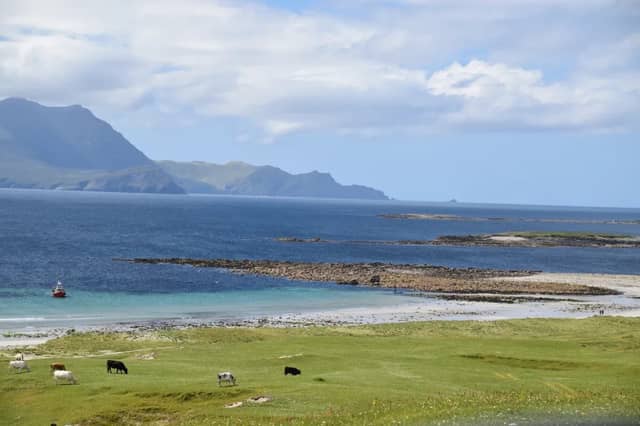
The research shows that Mayo has the largest stretch of coastline classified as “Very High Exposure”, at 414.5 km with much of the Mullet peninsula coming under this category as well as areas around Geesala, Doohoma and Ballycroy.
Parts of Achill and the Currane peninsula are also identified as areas of very high exposure along with large parts of the coastline around Carroniskey beach near Louisburgh. Parts of Westport and Kilmeena are identified as areas of very high exposure as well as high and moderate exposure.
The issue of coastal erosion was raised at the monthly meeting of the Westport/Belmullet Municipal District where Westport-based councillor Peter Flynn said the county was not ready for what is 'coming down the tracks'.
“We had an environment SPC last week where a Professor from UCC made it abundantly clear that 418 km of our coast line is the highest risk of flooding in the country. It's some stretch of coastline, and we are the highest in the country and if we don't wake up to what's coming down the tracks at us and we have nothing in situ in terms of structures to deal with this going forward.
“It's really a huge concern, and I mean when we can't get basic repairs done to piers and harbours, where are we in terms of protecting a coastline that's 418km in distance potentially. It all has to be dealt with, and we are in no way prepared for what's coming at us. When you get it in black and white that this is coming, we need to figure out what to do before it comes,” he told the meeting.
Earlier in the meeting, Erris-based councillor Seán Carey highlighted areas along the Mullet Peninsula and other areas of the barony which are under threat from coastal erosion and called for protection for them.
“These are low-lying areas that are at risk, and with climate change and global warming, it's these low-lying areas that want to be first affected. There has to be a plan put in place for them. I agree with Councilor Flynn as there needs to be a get together of individuals within the council and to address these,” he said.
Cllr Carey also commented that he has met with Minister Kevin 'Boxer' Moran who is responsible for the OPW and he was told that funding is available for these projects.
“I'd be asking the executive to look at these different locations and put an application together for funding, and get the ball rolling anyway.
“These are low lying areas...in Holland they can reclaim the land from the sea, but we want to be able to save the land from the sea,” he said.
Louisburgh-based councillor Chris Maxwell said there is growing frustration with the OPW regarding flooding in the county. He added that billions of euros were being spent on projects on the east coast of Ireland and it was time a fair share of it was sent to the west.
However Achill councillor Paul McNamara said that while more funding is always needed, councillors had to acknowledge the level of funding that has come for infrastructure projects in the county.