

"It's just not good enough": Mayo council erupts over Europe's highest electricity bills

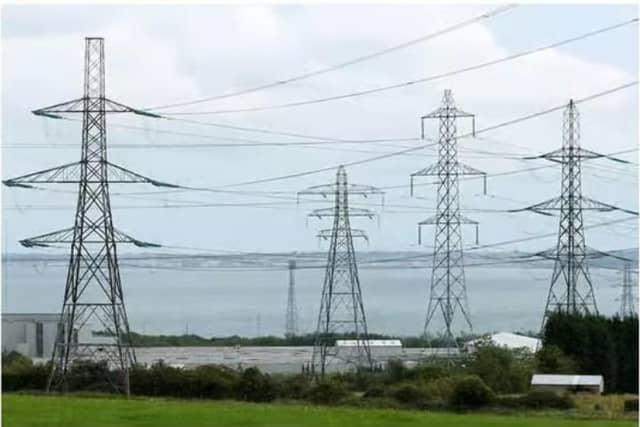

Councillors expressed concerns over the reliability of the network and the impact on vulnerable residents, with some arguing that the State should take control of public utilities to deliver projects more quickly and reduce costs for families.
Councillors clashed with representatives from ESB and Eirgrid at a meeting of Mayo County Council's Climate Strategic Policy Committee, as the utility companies set out plans to upgrade the county's electricity network amid warnings that demand is set to rise sharply over the coming years.
Representatives from both organisations told the meeting that forecasts show electricity demand in Mayo will increase significantly up to 2040. That growth, they said, will create "pinch points" across the network, with stations at Bellacorrick and Belmullet identified as needing increased capacity and updated circuits to keep pace.
ESB officials also acknowledged that progress is being hampered by the practical difficulties of expanding infrastructure. The semi-state company told the meeting that securing planning permission and identifying suitable sites for new stations is taking a long time, alongside the broader challenge of preparing the network for the 400 kV lines that would be required to support any future large-scale wind farm development in the region.
'Shocking'
The presentation prompted strong reaction from a number of councillors, who used the meeting to press the utility representatives on electricity costs, service reliability, and the case for greater public control over infrastructure.
Cllr Gerry Murray argued that any new investment would ultimately be recovered from consumers through levies, and questioned why private utilities had been allowed to profit heavily since deregulation. He asked what form of market reform was being considered and suggested that if the State borrowed to fund infrastructure directly, the cost to consumers would be lower. Murray said constituents had been left without power for months in the past, describing privatisation as "a disaster," and argued that the State leading infrastructure delivery would see projects rolled out more quickly. He said people wanted politicians to take back control of public utilities, rather than having to raise complaints with regulator ComReg, and wanted democratic accountability restored to the sector.
Cllr Harry Barrett was equally direct, telling the ESB and Eirgrid representatives that nothing being proposed would reduce prices for families. He pointed to record numbers of households in arrears and said Ireland has the highest standing charges in Europe, arguing that it is "ordinary working families" who are effectively subsidising the two companies.
Cllr Sean Carey focused his criticism on the reliability of the network in the Erris region, describing frequent outages that occur without warning, even in calm weather. He said the impact falls hardest on those who depend most on a stable supply, particularly elderly residents and people using medical devices, and said it was "shocking" that outages can go unrepaired for long periods.
What happened to the 400kV lines?
Cllr Peter Flynn raised concerns about the scale of ambition in current plans, asking why discussions were centred on 110kV infrastructure when the need for 400kV lines had first been raised thirteen years ago. He argued that if Mayo is to be positioned as a renewable energy hub, particularly for wind generation, the county should be aiming for higher-capacity lines than 110kV.
Responding, Timothy Hurley of ESB confirmed that the Grid West project had originally proposed a 400kV circuit for the region, but that the project was effectively cancelled after a number of the wind farms it was designed to support did not go ahead. He said there is renewed interest in additional wind farm development in the North Mayo area, and that this could trigger the need for a higher-capacity 220kV or 400kV network in the future.
Cllr Flynn said 400kV capacity should be part of the ongoing conversation, and also questioned why Ireland has the highest ESB rates in Europe. He asked whether a subsidised rate model had been considered for communities living in close proximity to major electricity infrastructure.
Council calls for greater investment
Joanne Grehan, Director of Services with Mayo County Council, told the meeting that the council was well aware of the critical pinch points facing the network and that there has not been sufficient or appropriate investment to date. She noted that many large corporate energy users are now installing their own back-up and resilient generating capacity rather than relying solely on the grid, meaning demand pressures are not always fully reflected in existing figures.
Grehan said the council wanted to "play our part" in addressing the issue, but reiterated that a greater level of capacity is needed than what is currently being delivered to allow the region to continue to grow.
Funded by the Local Democracy Reporting Scheme