

COUNTRY SIGHTS AND SOUNDS: Providing a lifeline for our feathered friends
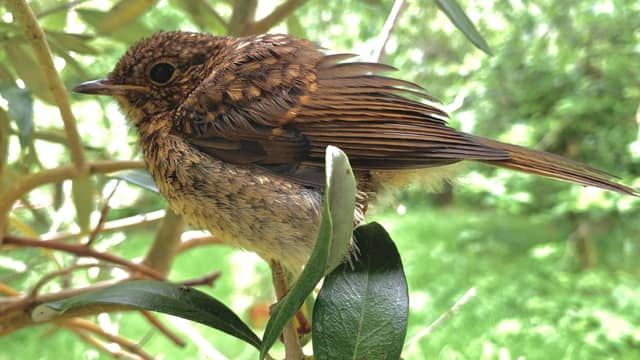

A sudden yet all too familiar thud startled me from my reverie, brought me back from the lost world of trout gorging on mayfly under a sunset sky of broken cloud and into the brutal present.
Thud, I say. Yes, the sound made as half an ounce of feather-wrapped flesh and bone hit the window had a dull, dead tone, but there was more to it than that. I heard the sharp crack of beak on glass, and the razored clip of tiny claws as these followed suit. In onomatopoeic terms, that word ‘thud’ does the death of a fledgling songbird a great disservice.
This is a perennial problem that runs from late March through to the end of summer, by which time the foolish and the clumsy have been weeded out. Some are lucky and strike a glancing blow from which recovery is swift. Others die a sudden death, neck's broken, that silver cord severed, the body primed for effervescent life quickly cold.
I found him in the long grass of No-mow May, beside the pearly blue of speedwell, amid the warm scent of wild mint, his little wings crumpled and his head with an ugly twist. The eyes were closed – never a good sign – and the beak hung open. In my hand, the tiny body thrummed, near the end of life.
I felt, as I always do, the impending loss of a special gift. Could it be saved?
Even if a small bird survives the initial impact of a window strike it will likely die of shock unless it is quickly treated. Shock brings a rapid loss of body heat. Accompanied by concussion and swelling or bleeding on the brain it is fatal.
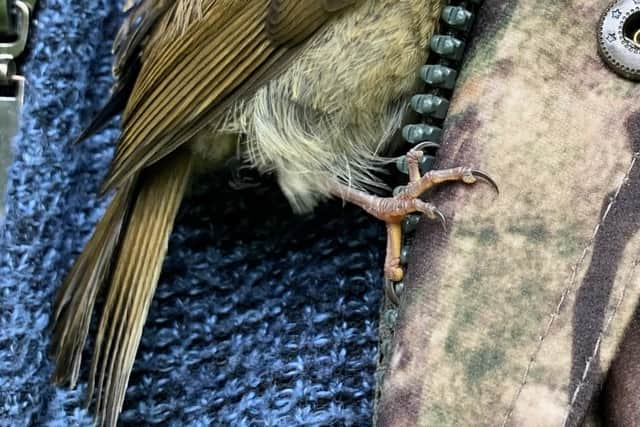
Where there’s life, there’s hope. With the little creature cupped in my palm, my hand went inside my jumper, and there it stayed until I felt the first stirrings of life. That staccato heartbeat gradually slowed and steadied and the bird managed to get its little feet beneath itself.
Two minutes later, although still dazed, it was strong enough to sit up, and after another five minutes I placed it carefully on the branch of a tree. Then it was gone, into the undergrowth. Success!
Two weeks ago it had been a male bullfinch that hit another window. He hadn’t fared as well and had lost his life. And before the summer is out there will be other casualties all around the neighbourhood.
So what can be done to help such unfortunates?
If a bird refuses to be captured it is probably going to survive unaided, unless there are cats in the vicinity. If it looks much the worse for its experience, try to trap it with cupped hands, doing so gently but firmly.
Place it in a small box, with tissue or something similar in the bottom, which it can grip with its claws. Put the box in a warm, dark place and leave it for at least twenty minutes. No food or water will be needed.
When the time comes for inspection, open the box outside in a quiet area. If the patient has partly recovered it will try and escape, but might not be strong enough to fly far. On the other hand it might seize the moment and be gone.
Should problems persist professional help might be required.
But is there any way to prevent such things happening in the first place?
I asked around. One friend tried stringing CDs across the window. “Did it work?” I asked.
“No.” Perhaps different artists would produce better results. Had she tried Barry Manilow, for instance? Maybe a poster would help…
One online resource suggests painting white lines across the glass, just a few inches apart. Another says an anti-reflective coating would not only deter the birds but would also cut down on the amount of sunlight coming into the house and reduce air conditioning costs. They are joking, I hope. We need every bit of heat and light we can squeeze from the sun before it starts to disappear again. And while we have sun we shall have baby birds, with cares and concern.
Michael Kingdon is a naturalist and keen fisherman, lives on the shores of Lough Carra, Co Mayo.