

Councillor calls for cull of Moy seals

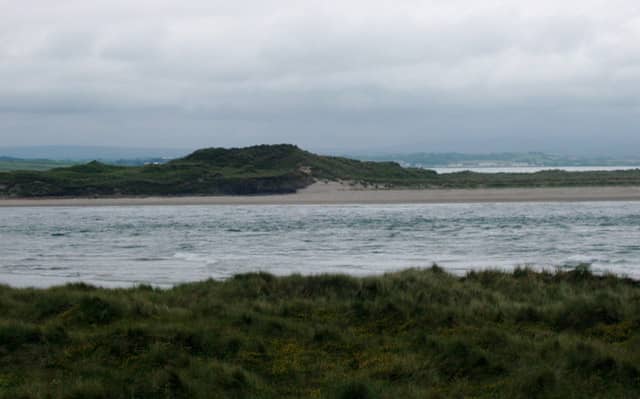

Ballina no longer the salmon capital of Ireland because of seals, says Cllr John O'Hara
BALLINA is no longer the salmon capital of Ireland due the number of seals preying on them ‘like vultures’, according to a local representative.
Cllr John O’Hara has called for a cull of the local seal population in Ballina, which he claimed could be eating up to a million salmon each year.
The Fine Gael councillor recently put forward a motion to Ballina Municipal District Council calling for the Minister for Housing, Local Government & Heritage to implement ‘a humane scheme’ to cull the seals.
The motion was supported by other elected members of the council, with the exception of Cllrs Mark Duffy and Séamus Weir.
‘Vultures’
BARTRAGH Island, located just off Killala Bay, is currently home to approximately 200 seals.
Speaking to The Mayo News, Cllr O’Hara said people who came to fish the River Moy this summer ‘didn’t get a pull’ due to the depletion of fish stock.
However, warm weather during summer also contributed to low fish stocks in the Moy – a factor that was acknowledged by Cllr O’Hara.
In June, Inland Fisheries Ireland (IFI) halted fishing on the Moy after water temperatures rose above 20 degrees, which can cause thermal stress and death in trout and salmon.
“You can drop the name of the salmon capital of Ireland, and it’s all because of the seal,” said Cllr O’Hara, who said that seals were attacking salmon ‘like vultures’ when the tide came in.
“For anybody that doesn’t know, a seal will eat 15 [salmon] per day. When you make up that for 200 seals alone, that’s 3,000 salmon a day. Multiply that for the year, just for the 200 of them that’s on Bartragh Island, that comes to 1.1 million for the year.”
Cllr O’Hara said he had ‘nothing against the seals’ but said there were too many of them living in the area to sustain the salmon population.
“I’ve nothing against the seals,” he said. “They’re lovely, they’re grand, but it’s like too much of anything. Nothing else can live in the river and that was never meant to be. There has to be life for everything.”
Opposition
CLLR Mark Duffy re-affirmed his opposition to the proposal when contacted by The Mayo News, insisting that an environmental assessment should be carried before any action is taken.
Cllr Duffy also suggested that declining fish life in the Moy should be dealt with by tackling pollution in the river.
“We’re not the experts, so if there is environmental impact and assessment reports then that would inform what needs to be done. It’s not for us to decide. But I’m not comfortable with what is being suggested [a cull] as an outright measure ,” Cllr Duffy told The Mayo News.
“I’d like to see us get professional advice and recommendations as opposed to just taking a swipe at the seals. The question that I’ve asked, that I’d like to understand a bit more, is when there was a higher population of salmon, how was there not a higher population of seals? How is it all of a sudden that seals are the ones to be blamed for the depletion of stocks?”
Writing in these pages, Lough Carra-based naturalist and fisherman Michael Kingdon said culling seals would not address the ‘plummeting’ salmon population and instead called for ‘a more ethical approach’ to commercial fishing.
Mr Kingdon also strongly disputed Cllr O’Hara’s claim that a seal will eat 15 salmon in a day. “They might each eat 15 salmon a year,” he told The Mayo News. “Most of their food consists of the lesser fish that are abundant in Killala Bay.”
A Department of Housing, Local Government & Heritage spokesperson told The Mayo News that seals are protected under the Wildlife Acts. However, a permit can be sought from the National Parks & Wildlife Service to ‘control’ seal populations ‘where serious damage is being caused by protected wild birds or by protected wild animals’ to food, flora, fauna, fishery, pen-reared wild birds, woodland buildings or aquaculture installations.
The Minister for Minister for Housing, Local Government & Heritage may also authorise actions ‘including entering on any land and the capture or killing of any such wild bird or any such wild animal, as he thinks appropriate to stop the damage’.