

Collecting our heritage

Native plants are critical to our entire ecosystem that creates our soil
The autumn fruits and seeds are ready for harvest. Apart from the most popular produce of apples, blackberries and hazelnuts there are many other unseen and unfamiliar seeds also in abundance that are available should we chose to collect them. Mostly described as ‘wildflowers’ I prefer to call them native plants. The flower is just the reproductive organ. The term ‘wild’ suggest chaos and disorder whereas native or indigenous plants sounds more appropriate to me. These plants arrived over time since the glaciers retreated about 10,000 years ago and have developed ancient mutual relationships with our other ecosystem organisms. These neglected plants are under considerable threat of extinction often struggling to exist in the smallest of areas that are not exploited by humans. Mostly they are labelled as ‘weeds’ – undesirables, pests, and problematic. Often exiled to the sides of roads or to cracks in a pavement, the last of their kind are resisting extinction. Many cannot exist in continuously mowed or grazed green spaces or under concrete although some have evolved with resilient survival mechanisms. They are our living heritage but sadly it is not our culture to learn of them or have them in our spaces. In Victorian times, it was probably the unique and never seen before highly coloured overseas exotic plants that were prized and embraced, for those that had land to spare, whereas the then common native plants were rejected. Has the time now come for us to respect and recover our indigenous species?
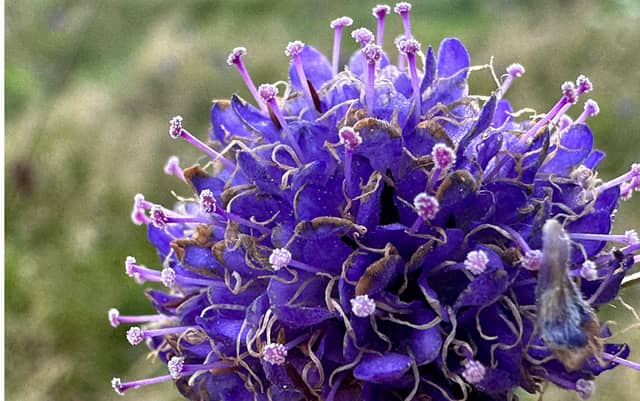
Our native plants are beautiful, often in a visually more subtle and humble presentation but there are show offs too. More importantly our native plants are critical to our entire ecosystem that creates our soil, slows our flooding, cleans our air, removes our toxins and feeds all life. Some highly attractive native plants from which to collect seeds from include foxglove, perennial sowthistle, devils bit scabious, great mullein, red campion, purple loosestrife, tufted vetch, woundwort, knapweed, angelica, and marsh marigolds. These mostly unknown plants tend not to be available in garden centres although they are included in some wildflower seed mixes. The problem with these mixes is that most are not Irish provenance and they dilute local genetics which have evolved with regional pollinators, soils and climate.
At present seeds are available for woundworts, perennial sow thistles, agrimony, meadow sweet and knapweed. The mighty oak will drop its acorns usually in the first week of October after blustery conditions. A walking or bicycle trip around country roads is a great way to come across roadside and hedgerow seeds. It is rare to come across a species rich meadow of old that has not been processed to a pure grass plantation but if you do it is a treasure trove of seeds at this time of year. Another great location are brown field sites - neglected construction sites can be real gems for native plant material.
Seed is usually ready for collection about 5-7 weeks after flowering (a phone calendar reminder is very useful). Seeds can be planted directly into their location or grown in containers. Direct planted seeds produce a healthier undisturbed root creating a stronger plant but are at risk of being eaten or out competed by other plants. Container grown seeds can be observed and protected but can be slow to thrive when planted out to their final location. Some seeds have a dormancy period where they may not grow for 2 years such as hawthorn tree seeds and require patience. This process can be accelerated with so called stratification which mimics the natural outdoor softening conditions using cold treatment, soaking or seed shell trauma.
General rule
As a general rule do not plant seeds deeper than 3 times their diameter – some seeds are so small they need to be just sprinkled on the soil surface eg foxglove. Some seeds will be eaten by mice so need protection eg. acorns and crab apple pips (I have learnt the hard way!). Some plants will put their resources into the root system the first year then flower in the second year.
Seeds can be kept until the spring but I prefer to follow nature and get them into the soil at the time they have always fallen, in autumn. To increase plant growth success recall where the parent plant was growing - was it dry or wet soil, shade or full sun, sandy or clay soil?
It can be very exciting to see your collected local provenance heritage plant arise from the soil to continue to produce its own seed. You may have greatly helped that species survive and spread in your own locality. The national biodiversity data centre has great advice regarding native seed collection on pollinators.ie.
Oliver Whyte is a member of the Clew Bay Garden Trail, a chain of beautiful and unique private gardens that open to the public during summer to raise funds for charity (see www.clewbaygardentrail.ie for more). Each month, an article by a trail member will appear in these pages.