

SUSTAINABILITY Growing veg from seed, part 1
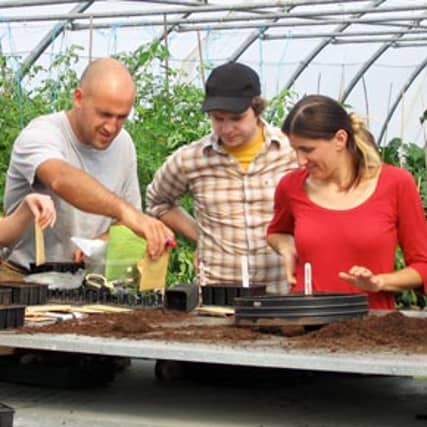

In the first of a two-part series of articles on growing from seed, Hans Wieland looks at the basics and provides some tips
Growing food from seed Part 1
Hans Wieland
Growing food from seeds is one of the wonders of gardening and often taken for granted, but it is definitely one of the most-exciting and even most-addictive activities. Browsing seed catalogues early in the year answers the all important question: “Is it worth all the trouble of raising your own plants, rather than buying them ready for planting out?” once and for all: Yes, yes, yes, it is worth it – if only for the choice.
Most organic seed catalogues list nearly 50 varieties of tomatoes, more than 50 varieties of lettuce from Butterhead to Cos and loose-leaf type to oriental greens. Many suppliers have 20 different carrot seeds in their programme, from Autumn King and Early Nantes to ‘healthy coloured carrots’ that are specially selected for their health benefits when eaten raw, being rich in antioxidants, beta carotene and vitamin A.
We all know that the freshest vegetables we can get are from our garden. Home-grown vegetables have been proven to give us more vitamins, minerals and nutrients than shop-bought alternatives – and they have so much more flavor too!
You might also want to grow unusual vegetables that are expensive to buy or hard to get, kohlrabi maybe, or seeds for champion pumpkins, yellow courgettes or purple beans.
Growing from seed also means you avoid the risk of introducing soil-borne diseases into your garden. It also is more economical to grow from seed than to buy expensive transplants. Last but not least, it is fun and satisfying too.
For good germination there are four basic requirements:
Viable seed
Seeds must be of good quality and not too old. On average, most seeds store for two to four years in a cool, dry place. Check the germination information on the package. Seeds should never be left in a hot or damp polytunnel, as they will deteriorate quickly.
Correct temperature
Each crop has a minimum, optimum and maximum temperature for germination. An average temperature for most seeds is 16-20°C. Tomato seeds, for example, like it warm – around 20°C. On the other hand, too high a temperature can be detrimental to certain crops. Lettuce does not germinate well when the temperature goes above 24°C. There are different types of heated propagation units available that come with heating pads or mats with thermostat or soil-warming cables.
Moisture and air
Seeds need moisture and air to germinate. The higher the required temperature, the higher the water uptake, but beware of overwatering the seeds, as it will encourage fungal diseases.
Light
Once germination has occurred, all plants require light, ideally from above. Germination on window sills works only to a degree and plants often become leggy. Note: A few vegetable seeds, such as lettuce and celery, require light to germinate, and they need to be sown shallow.
How to sow
At The Organic Centre, we are often asked is it better to sow direct into the soil or in pots and trays. The answer depends on the crop. Most root crops, such as carrots, beetroot, parsnips, swedes and radish, are better sown directly because they don’t transplant well. Also vegetables with large seeds, such as peas and beans, are generally sown direct.
Most other seeds are sown in modular or cell trays. The seedlings can then be transplanted into the prepared bed or potted on into bigger pots for another two to four weeks. These well established small plants have the extra advantage of being more resistant to slug attacks.
You can buy different types of plastic or polystyrene trays or you can recycle yoghurt pots and cut milk cartoons or use home-made seed pouches from newspapers.
To produce quality transplants requires some skills and experience. The Organic Centre is running several one-day introductory courses to organic gardening – contact the centre for more details.
Next time Growing food from seed, Part 2
Hans Wieland is joint manager of The Organic Centre, Rossinver, Co Leitrim, which offers courses, training and information in organic growing, and runs an Eco Shop and an online gardening store. For more information, visit www.theorganiccentre.ie, e-mail [email protected] or phone 071 9854338.
Questions or comments? Contact Hans at [email protected]