

HEALTH Headaches, from the neck up
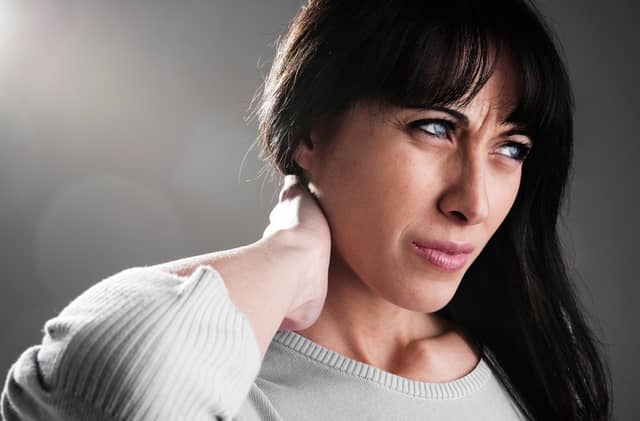

Women are four times more likely to suffer from cervicogenic headaches, which arise from the neck, writes Andrew O’Brien
Health
Andrew O'Brien
Nobody likes headaches. At the very least, they are an annoyance that you could do without, or a reminder that you should have gone home earlier! At worst, they can be debilitating, progressing to migraines and leaving sufferers stuck indoors, afraid of light.
The causes of headaches are numerous, from the innocuous to the sinister, so the first course of action for anyone who suffers with frequent or severe headaches should be to seek the advice of their GP to rule out serious illness.
For the sake of this article, we are going to concentrate on cervicogenic headaches – those which arise from the neck.
Statistics suggest that around 2.5 percent of the population suffers with cervicogenic headaches, but amongst patients with chronic headaches, one-fifth are cervicogenic in origin. The average age of patients is 43 years and, I’m afraid, women are four times more likely to suffer than men.
Cervicogenic headaches are generally one sided (although bilateral headaches do occur) and occur at the base of the head, over your temple or behind the eyes. They are triggered by neck movement or awkward positions, and can be reproduced by pressure near the top of the neck or at the base of the head on the same side. Sufferers usually show reduced neck range of movement, and the facet joints of the neck tend to be stiff on palpation.
What should you do if you think your headache might be neck related? Personally, I recommend checking it for yourself. If you feel a headache coming on, try massaging under the base of your head on that side for a minute then stop and see how you feel. If the pain has reduced, go again for another minute. With some luck you might be able to get rid of the pain altogether.
If however, you notice that the pain hasn’t changed or has gotten worse after the first minute, do not keep going. The small muscles at the base of your head are very sensitive, and you could easily make the headache worse!
If you find that self-massage works, then chances are that your headaches are cervicogenic. If it doesn’t, there is still a good chance that your headaches are coming from your neck, but it might take a proper assessment with a chartered physiotherapist to get a proper diagnosis. Treatment involves mobilisation of the joints between the vertebrae in your neck, along with massage, and possibly acupuncture or dry needling.
It is also worthwhile to look at the background factors – what you do during the day. Ensuring your workplace set up is as good as it can be, and your posture is good while sitting is important. Anyone who knows me is aware of my belief that chairs are just bad for you, but if you have to sit, then at least get up and move at least once every hour.
If you suffer with frequent or severe headaches then, as I said above, you should seek the advice of your GP to rule out serious illness. If you also have a history of neck problems, there is a chance that your headaches are coming from the neck, and you would be well served to attend your chartered physiotherapist for assessment.
Oh, and remember, an easy way to avoid another certain kind of headache is to go home earlier!Andrew O’Brien is a chartered physiotherapist and the owner of Wannarun Physiotherapy and Running Clinic at Westport Leisure Park. He can be contacted on 083 1593200 or at www.wannarun.ie