

FARMING Good land, down the drain

Chris Brown on the ever-increasing threat of flash floods and their impact on soil quality and farming
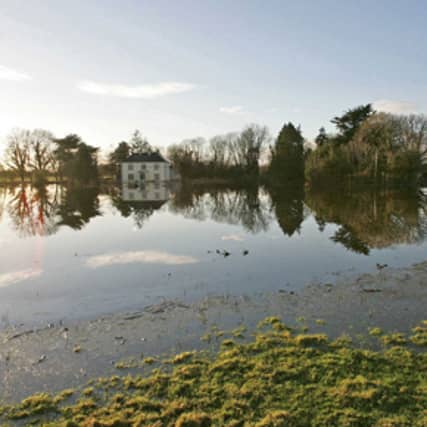
UNDER WATER Flooded farmland in Ballinrobe a few years ago.?Pic: Michael Donnelly
Good land, down the drain
Food matters
Chris Brown
For the past 20 years or so, those that study our climate have been warning about the effects of global warming and what the changing weather patterns might mean to us as we go about our daily lives. Many people spent those years ‘doing an ostrich’ and pretending nothing was changing, but heads are now starting to come out from under the sand, because extreme rainfall is happening more often. The evidence is on the table that deluge rain is more common.
At school I remember the geography teacher explaining about rainfall graphs. These graphs show the amount of rain that has fallen in the past; rainfall’s history since we started keeping records. What struck me was just how small those amounts were. Typically, even on a day of heavy rain, only a couple of millimeters would fall.
This is no longer the case, and with greater regularity, the amounts of rain that used to take weeks to come down is dumped in only a few days (sometimes hours!). Big volumes of water, heavy and powerful, is not something you would want to get in the way of. Forcing its way downwards, dragged relentlessly by Mr Gravity and his fabulous pull, rain becomes a power so great that mountainsides can slip, bridges can be washed away and lives can be lost.
Recent floodings have again resulted in the view that there isn’t a very coherent plan when it comes to dealing with the consequences of floodwater, which happens very suddenly – as was the case the last time, and the time before that.
What’s causing the downpours?
I have a friend who makes radio documentaries, and together we listened to a recording of an elderly lady who had spent her entire life living on a small Mediterranean island just off the coast of Croatia. According to her, based on her lifetime’s observations, much of the blame for heavier rainfall lies with all the aircraft she now watches overhead. They scour the sky with trails of water vapour as they burn fuel: the fuel that’s needed to put people and goods up in the sky.
If she is right, it shows the enormity of the task of reversing the march forward of climate change. Although airline fuel consumes huge amounts of natural resources that we cannot replace, and therefore cannot afford to use, the past decade has seen us using more of it. The price of flights has fallen, sometimes to less than the price of a packet of peanuts. We can’t imagine a world without a sky full of planes. What would we do if we couldn’t fly or consume things that have been flown in?
Fertility lost
Heavy rain washes soil downwards as mudslides show, which in turn silts up estuaries. This process washes away the very fabric of the world’s surface, down towards the sea, taking the fertility of the soil with it. As a farmer, the last thing you want to do is to lose fertility from the soil. You are faced with either replacing it, as would be the case if you bought and applied fertilizer, or having soil that produces less.
Growing spuds on the seabed is difficult to imagine, so we should do what we can to stop it sliding away. Perhaps one day we might need to go and get that washed-away soil back by dredging river mouths and spreading it back on the land – this is easier to imagine, but still sounds very difficult. By far, the best approach is to make as much compost as possible and replenish the ground that rainfall is eroding.
Chris Brown is a food producer in Louisburgh. He has a particular interest in food miles and buying local.