

Trump tax moves led Westport firm to redomicile to US in 2020

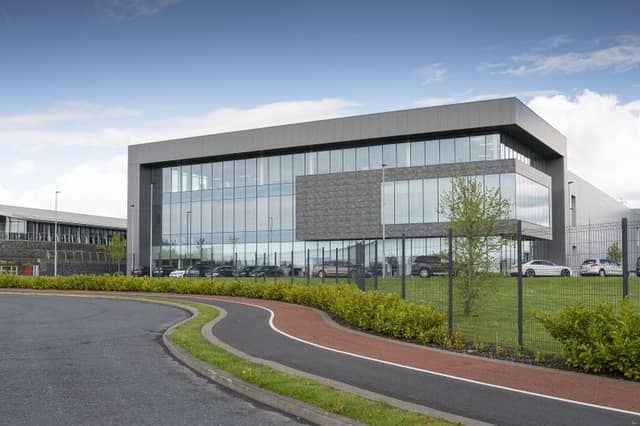

The 2020 purchase of Allergan by Abbvie saw the company redomicile to the United States
Ireland’s economic model of attracting big multinational companies is facing its greatest challenge yet.
The current economic uncertainty over trade tariffs and a muted 200 percent on medicines by the President of the United States, Donald J Trump, has caused concern over Ireland’s foreign direct investment policy.
Comments by Abbvie CEO, Rob Michael, that the tax reforms in 2017 by President Trump enabled it to buy Allergan and the company redomiciled to the United States, were reported in the Irish Independent this week.
The Mayo News understands that the $63 billion deal that saw AbbVie acquire Allegan in 2020 also saw the company redomicile to the United States at that time.
Westport’s Allergan is a huge employer in the town, with over 1,300 working at the facility.
It is Abbvie's sole manufacturing facility for the production of Botox worldwide.
The redomiciling has had no direct consequence for production at the facility or for jobs in the area thus far.
However, with the growing trend of pharmaceutical companies investing more in manufacturing in the United States, further investment in the county may suffer as a result.
The significance of this move would have been seen in corporation tax being paid in the United States, as opposed to Ireland.
The larger question is will other major corporations follow suit and re-shore to the United States, thus depriving the Irish state of their corporation taxes.
The supercharged success in collecting corporation taxes, especially in the pharmaceutical sector, led to absurd national GDP figures for the country.
It reached peak farce in 2015 when a 26 percent growth in GDP led prominent US economist Paul Krugan to coin the phrase “leprechaun economics” to describe the Irish economy.
Over the last ten years alone, €156 billion of corporate taxes have landed in the Irish exchequer’s bank account.
The Department of Finance is on record as saying: "A small handful of large, highly profitable firms are not a sustainable tax base on which to build permanent spending commitments."
Pharmaceuticals have been a major part of this story.
Not only have they added huge amounts of corporate tax, the sector has also created highly skilled employment in regions outside the major cities.
Westport’s Allergan being a prime example,
As our columnist John Bradley has explained in this newspaper, there “was a massive influx of high-technology, export-oriented multinational investment and the complete transformation of the whole economy."
"The IDA strategists quickly realised that Ireland’s crucial advantage in winning inward investment in high-technology, high-profit sectors, was its low rate of tax on corporate profits."
In the era of Trump and a big focus on trade balances, Ireland’s trade surplus in goods of €70 billion was always going to draw attention.
When services are included in the mix, Ireland actually has a trade deficit of €93 billion.