

Holy Trinity Pupils rediscover Westport's industrial past
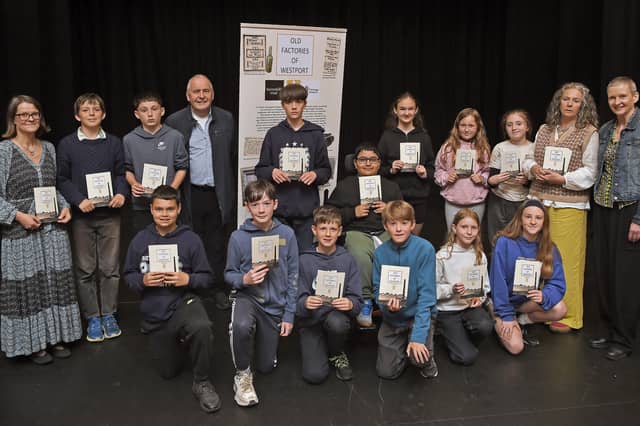

Primary school pupils from Westport have produced a booklet celebrating the town's forgotten industrial heritage, following a fascinating local history project that uncovered a wealth of information about the factories that once formed the backbone of the town's economy.
The booklet, entitled Old Factories of Westport, was created by fifth and sixth class pupils at Holy Trinity National School as part of the Heritage Keepers programme with Burrenbeo Trust. It was officially launched by local broadcaster, historian and Mayo News columnist Liamy MacNally.
The project saw pupils research a surprising variety of manufacturing industries that once operated in the town, including The Irish Sewing Cotton Company Factory, The Clog Factory, The Reliable Shoe Company Ltd, and The Popular Cap Company. Through interviews, newspaper archives, old advertisements, artefacts and online research, many children also discovered personal family connections to the factories they studied.
READ NEXT: Dark Christmas ahead for Westport
Principal Orla Brickenden described the day as one of great pride for the school: “The booklet we are launching is much more than a collection of facts and photographs,” she said. “It's a testament to the curiosity, dedication, and hard work of our pupils who set out to discover the stories of factories that once played an important role in the life of Westport.”
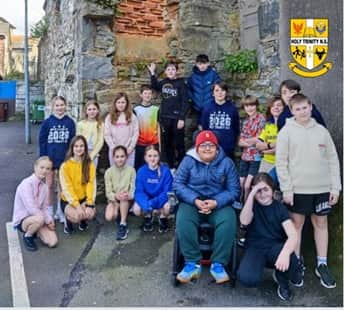
She added that the project had transformed pupils into genuine historians: “The children became researchers, storytellers ― they interviewed people, gathered information, asked thoughtful questions, and transformed what they learned into engaging and informative writing.”
Praise
At the launch, MacNally praised the quality of the research and encouraged the children to appreciate the scale of what the town once produced. He highlighted one striking detail uncovered in the booklet ― that Westport Stout was the only stout sold at Brighton, Ascot and the Derby race meetings.
“The content of the book is mind-blowing ― great information, great photographs, bringing everything to life again, and that's what history does. It brings the past to life,” he said.
The project also bridged generations, with pupils interviewing local people about their memories of working life in the town. Joe Halloran, who spoke to his grandson Matthew Kinghan for the booklet, said it was “lovely to be associated with them and show them how things have progressed, and how the town has progressed” since his own schooldays.
Harry Hughes was also interviewed by the students and praised “the wonderful production of such a well researched book.”
He explained that “many of these textile based factories operated under protection after the Economic War in the 1930's. When Ireland joined the EU in the 1970's and globalisation in the 1990's, production moved to Asia. The Old Factories gave vital employment and allowed people to stay and work at home. Thankfully Ireland has adopted the more modern industries, which has brought great economic benefit to the country and better opportunities for today's students.”
Significance
Class teacher Ms Meriel Donaghy said publishing the booklet gave the project real significance beyond the classroom. “It shows the children that their work really does have meaning ― it has real meaning,” she said. She was also quick to credit SNA Áine Lavelle, who first sparked the idea. “Áine Lavelle is actually the person who inspired the booklet, as she first mentioned factories in the classroom and got the class thinking.”
Holy Trinity, which is Westport's oldest national school and still occupies its 200-year-old building on the Newport Road, has a long tradition of engaging pupils in community-focused projects. The school said it was "incredibly proud" of what the children had achieved, describing the booklet as a “wonderful piece of local history that would be enjoyed for years to come.”
MacNally, meanwhile, was already looking ahead, challenging the pupils to take on their next project. “You've really opened the door now to bring history back into the present,” he told them, suggesting the town's hotels, schools, bakeries, pubs, churches and shops all had stories waiting to be told.