

OPINION: Fight the real enemy

We must change modern Ireland’s lack of empathy and support for its most vulnerable
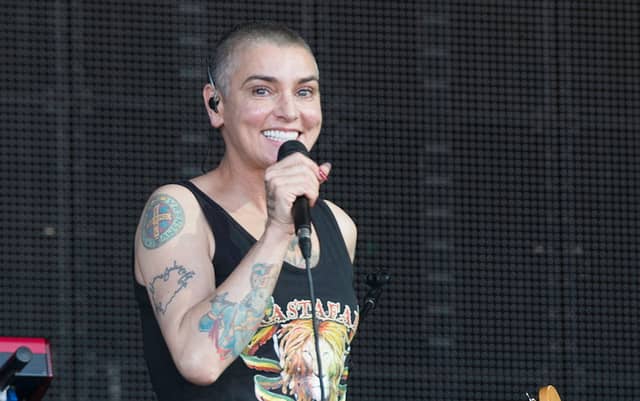
The front page of the Irish Examiner, Thursday morning. Black and white. A photo of Sinéad O’Connor in profile. An old photo, capturing a youthful, ethereal beauty. Her head shaved, eyes downcast, she looks serene. The headline: ‘A child of Ireland, Our girl, Sinéad, Our beloved friend’.
Beneath the tribute piece, which was written by Tom Dunne, was the next news story of the day. The banner headline: Call for ‘radical overhaul’ of Camhs service.
The juxtaposition was striking. A front page that speaks of an Ireland, past and present.
No doubt, as you read this, coverage of Sinéad’s death will already have reached saturation point. The next big story will have taken over. As I write, however, the news is raw.
There is a soreness of heart, thinking of this incredible woman, of all for which she stood so passionately, and of how her Ireland treated her. There is an outpouring of love, that one only hopes she realised existed before she died. Grief, for the loss of such an icon so young. Anger, for an Ireland that harmed not just Sinéad, but so many other women, in the worst of ways. And gratitude, for her courage, bravery and integrity in calling that out. And shame, for the way she was treated when clearly struggling so badly with her mental and emotional health.
In the last decade, the conversation around mental health has evolved, and the associated stigma has diminished, but sadly, not by much.
Ireland’s attitude towards people with mental-health issues, particularly those not involving depression, remains problematic. Often we would prefer to just ignore the topic. This is reflected in the fact that government after government has failed – or failed to even try – to address the deficiencies in our mental-health services to ensure the best and most effective care for people who struggle with their minds.
Sinéad herself, despite her extraordinary willingness to be vulnerable and present herself as she was at any given time, was at times treated with derision and ridiculed by many when it was clear she was in deep distress.
The media mined and exploited her anguish for cheap, salacious clickbait. Even Gay Byrne, who had appeared quite protective of Sinéad in previous interviews, interviewed her in 1999 on the Late Late Show when she appeared to be in emotional turmoil. On social media, she was ridiculed and dismissed. Eyes rolled. Many of those same people are now eulogising her.
O’Connor’s 2021 memoir, ‘Rememberings’ is an incredible read. It is a no-holds-barred insight into the singer’s formative years and later struggles written in stunning prose, with razor-sharp, sometimes self-deprecating wit. It took years to write, interrupted by a breakdown, and the change in O’Connor’s voice in the latter part is striking. As a reader, you find yourself wondering where reality ends and fantasy begins, but it was Sinéad’s reality as she herself saw and believed it. Her unapologetic outspokenness, her unwavering commitment to her own truth, and her passion for justice were never compromised.
As women in Ireland, we owe so much to Sinéad. A lioness, but with a soft heart, she spoke truth to power and rocked the system, taking on the might of the Catholic Church and destroying her international career in the process, not that she cared.
Throughout her short life, she advocated fearlessly for the marginalised – child-abuse victims, people with AIDS, refugees, women and their reproductive rights, in a deeply patriarchal and oppressive society. Because of this, and the way she lived her life, she was deemed untrustworthy, unstable, unworthy.
Women with something to say are deemed dangerous, and people will attempt to stamp them down. But despite the misogyny she encountered, there was no quenching Sinéad’s fire. “It is no measure of health to be well-adjusted to a profoundly sick society,” she said, quoting the eminent philosopher Jiddu Krishnamurti.
Ironically, her courage and her fragility, which made her life so difficult when she was alive are now lauded after her death.
Back to the second big news story of the day on the front pages. A report on the HSE’s Camhs (Child and Adolescent Mental Health Services) spoke of a litany of failures, and the danger posed to children’s safety due to long waiting lists, lack of follow-up care, and a dearth of resources. It told of the ‘significant distress and frustration’ experienced by families navigating the system, and alarmingly, the failure of some Camhs teams to monitor children using antipsychotic medication.
The lack of compassion with which Sinéad O’Connor was treated by Irish society is reflected still in these failings.
The need for mental healthcare is ignored and dismissed by those in power, as proven by the constant diversion of funds away from mental health services by successive governments.
Suicide statistics are now rarely highlighted. The care to those in mental distress provided by our so-called health service is woefully, dangerously deficient, with young people in particular struggling to access the care they need.
“Fight the real enemy,” Sinéad once said. “We have confidence in good over evil.” The real enemy in modern-day Ireland – a lack of compassion, empathy and willingness by this capitalist state to support our most vulnerable people is one of the greatest evils of all.
Sinéad can rest now. We owe her a debt of gratitude. And we can only hope she is finally at peace.