

OPINION: Accidents happen, but why?

Driving more slowly not only saves money, it saves lives
THIS year there has been a series of tragic road accidents and deaths that have caused sorrow and heartbreak in many small communities throughout the country. The worst often involve young people, just starting promising lives as adults; lives that will not now be lived.
We are a caring society, so the immediate media coverage rightly focusses on the shocking impact such deaths have on families and close knitted communities, often in rural towns and villages where everybody knows everybody else. In such communities, in the immortal words of John Donne, ‘No man is an island, entire of itself; every man is a piece of the continent, a part of the main’.
Passivity
HOWEVER, one is left with an uneasy feeling that there is an element of passivity when it comes to road-traffic accidents that is not the case with other types of air, rail and shipping accidents.
A common characteristic of these other modes of transport is that they are either organised and controlled by state bodies or, if private, are tightly regulated by public authorities. When accidents occur, they are investigated immediately and thoroughly.
A favourite TV programme of mine is Air Crash Investigation, which describes state-mandated investigations that always follow air crashes. The diligence with which such investigations are pursued is driven by the obvious fear that the cause of any specific crash, if not uncovered and rectified, might lead to further similar accidents.
Consider the two crashes of Boeing’s 737 Max airliner, where the investigation uncovered a serious flaw with electronic control systems that had caused the crashes. Where the cause is found to be due to pilot error – as in the case of the BEA crash at Staines in 1972 that resulted in the deaths of many prominent Irish business executives – changes to how pilots are trained and how they operate in the cockpit can reduce the probability of repeats.
Then and now
TOTAL annual Irish road deaths peaked at 640 in 1972 and slowly declined since then to 147 in 2020. Car ownership per capita doubled between 1990 and 2020, from 228 per 1,000 to 446.
Improved safety features such as air bags, seat belts, automatic breaking systems, and improved road quality have reduced road deaths even as car ownership rates soared. But it still puzzles me that advertisements stress such characteristics as how quickly a car can go from standing to 100km/h. Seven seconds for a car recently written up in this newspaper!
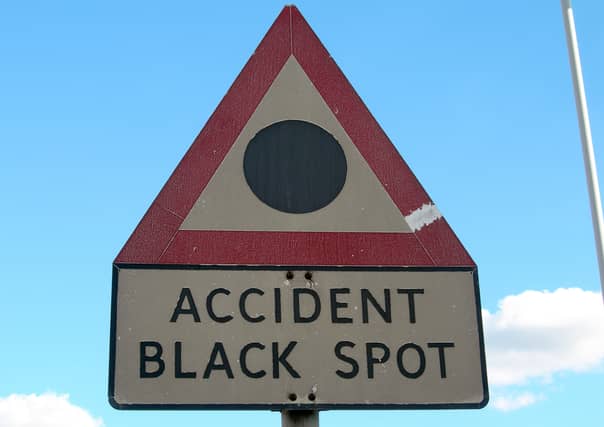
Back in the 1970s I drove with a German friend from Dublin to Westport. At one stage my friend looked puzzled as we passed a sign that read ‘ACCIDENT BLACK SPOT’. He asked for an explanation. When I said that it was a bad bend that caused many crashes, he looked even more puzzled and asked why the bend had not been straightened out. Of course, that was not how we did things then.
Further on, he drew my attention to the ‘DEAD SLOW’ sign that heralded some problem was ahead. The sharp bends directly under railway bridges shocked him, and still exist in Westport and east of Claremorris. But the most egregious accident black spots have been removed.
Cult of speed
ROAD improvements and car technology can only go so far in preventing accidents. When we drive a car, we are our own pilot, train driver or ship’s captain. Unlike planes, trains and boats, private cars do not have a built-in black box that records what a car is doing and helps explain how and why an accident occurred.
Have you observed how HGVs scrupulously observe speed limits? They have tachographs that are regularly examined by the Guards and speed violations can be uncovered. For private vehicles, it is almost the opposite that holds. How often have oncoming cars flashed their lights at you, warning you that a mobile speed van is around the corner?
Excessive speed is the biggest killer on the road. When I was younger, I tended to drive at the legal speed limit and became frustrated when stuck behind a slower car on a narrow road when passing was dangerous or illegal. But the mixed quality of the road system in counties like Mayo means that even the legal speed limit can be unsafe, particularly at night. Today, it amuses me when a high-performance car screams past me, yet a few kilometres further on I find myself right behind it in a convoy of traffic.
My 12-year-old car has a fuel consumption monitor. I discovered that the optimum speed to minimise fuel consumption is between 80 and 85km/h. Driving at 100km/hr reduces that by about 15 percent. Driving at 120km/h on the motorway reduces it by 25 percent. And I take more than 30 seconds to go from zero to 85km/h!
Not only do you save money by driving slower. Experience suggests that you reach your destination more safely and in about the same time as high-powered speeders. And it is safer for other road users as well.
Just think how many lives would have been saved this year had it not been for the cult of speed.
John Bradley is a former ESRI professor and has published on the island economy of Ireland, EU development policy, industrial strategy and economic modelling.