

NATURE: Small wonders that end in wings

Country Sights and Sounds with Michael Kindgon
Along the shoreline, over reeds and open water, swallows are already gathering. Most of these are young birds not long from the nest, although a few mature specimens are with them, presumably as nursemaids. We see the difference principally in length of tails; this year’s crop have less precise colouring and a yellow gape, but also have shorter tail feathers than their parents.
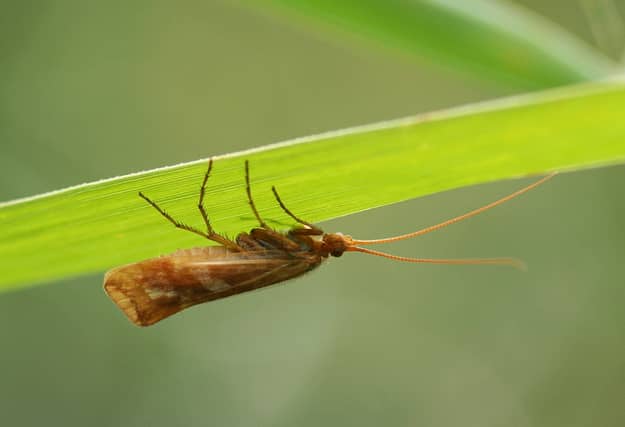
Late summer sees plentiful hatches of insects, including caddis flies, some of which are over an inch long. These beautiful and delicate, moth-like creatures provide bountiful feeding for fledgling swallows as well as for other birds, for bats of various kinds, and of course for fish.
While some caddis species hatch by day, most emerge from the water as the sun goes down or even into darkness. To be afloat deep into dusk, with the water calm and untroubled, the moon and stars bright overhead, and to find rare moments of serenity and clarity amid these emerging hordes, adds meaning and purpose to one’s own existence.
The water surface might be littered with the dead and the dying. Sometimes, through a windless period, the bodies of fallen insects lie wing tip to wing tip, from westerly shallows right to the eastern shore; then, when the merest breeze returns to riffle the surface, these are driven by the wind to lie in drifts a foot wide to form a new foundation for the aquatic nutrient cycle.
It is the living we are most interested in. Take the Murrough, or the great red sedge, as an example. On quiet summer nights, even into autumn, these giant and very beautiful caddis rise up through the water column as pupae. Their life of feeding and growing at an end, they are now at a stage of advanced metamorphosis similar to that undergone by the caterpillars of butterflies and moths, before they emerge as adults.
This process involves the liquefaction of body organs and a total restructuring of the living being. It is, quite simply, one of the greatest wonders we might witness on earth.
The squat and ugly grub that entered a state of torpor on the lake floor has become something splendrous, with gentle, felt-like wings, each of which are endowed with perfectly geometrical markings. Add in the large, dark eyes and near-tireless flight and I defy you not to wonder.
Yet there is more. A digestive system that served the creature perfectly though immaturity has been replaced by reproductive organs that will serve the sole purpose in life – to find a mate and perpetuate the species.
This profound change complete, the caddis pupa inflates and uses specially adapted legs to propel itself to the surface. Once there, the case splits and out climbs the adult, which will use the floating remains of its pupal shell as a raft on which to shed its outer skin, and then to stretch and dry its wings before becoming airborne. A little exercise might help in this regard! The newly emerged adult begins to run over the surface of the water, its specially designed feet somehow finding purchase on the meniscus. It darts this way and that at a truly impressive speed, while searching for some kind of structure that might serve as a ladder.
Trout are on the prowl. They know well when such hatches are taking place and will intercept the caddis at any stage of its perilous journey. Eager for the substantial mouthful offered by the Murrough, the fish chase and splash, striking and missing multiple times before gaining their meal, or seeing it escape with newfound power of flight.
Life’s path has kept me off the water for the last few weeks, causing me to miss some of the year’s more heartening experiences. I failed to see gadwall, mallard and tufted duck bring young families out from reed beds to hunt caddis in the gloaming. Even warblers took their young away to the wood before I met them. A terrific fall of flying ants occurred when I was not there to watch.
Now the swallows are gathering as another summer nears its end. Each evening they crowd around the reeds in which they roost, soaring, diving, revelling in the warmth of the fading year. Their numbers build day on day as more and more young ones leave faraway nests.
Many will enjoy these birds. Not so many will witness the little miracles that sustain them. There is so much to learn, no end to knowledge; so little time.