

Love at new heights: changing times for Mayo weddings


Fr John Kenny and Dermott Langan on the changing face of modern marriage ceremonies
On the summit of Croagh Patrick, more than 2,500 feet above sea level, Fr John Kenny has witnessed some of the intimate weddings imaginable.
Sometimes there are dozens of guests. Other times, just the couple themselves. One couple asked their photographers to act as witnesses. Another couple returned, not to marry, but this time to baptise their daughter on the same mountain where they had exchanged vows.
“I've celebrated twelve weddings on Croagh Patrick,” he says. “Every wedding up there is unique.”
While these weddings might capture the imagination, they are also highly symbolic of the ever-changing landscape of weddings in Mayo.
Mayo remains well above the national average in terms of those celebrating their wedding with a Roman Catholic ceremony; the figures represent a noticeable difference.
According to CSO figures, 61 per cent of opposite-sex marriages were with a Roman Catholic ceremony in 2024, which is a stark difference in figures from ten years prior. In 2014, 85.6 per cent of opposite sex couples married with the same ceremony type.
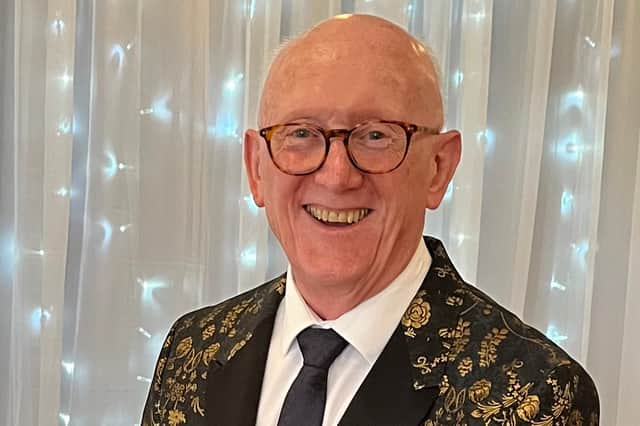
Those who officiate at weddings have witnessed that change firsthand. The Mayo News spoke to Catholic priest Fr John Kenny and spiritual celebrant Dermott Langan about how couples' priorities have evolved.
A different generation
“When I first started, weddings were a huge part of a priest’s life,” Fr Kenny says.
Summer weekends were once filled with multiple church weddings. Today, both the number of priests and the number of church ceremonies have fallen considerably.
He believes there is no single explanation. Some couples choose to marry abroad before returning home for a church blessing. Others opt for civil or humanist ceremonies instead.
Dermott Langan has watched the same shift unfold from a different perspective.
Twenty years ago, he says, most Irish couples married either in a church or a civil registry office. Now, many are looking for something that feels more personal.
“I think they don’t really like the formality of going to a church,” he says. “Registry offices are very cold and sterile. There’s no fun to that.”
Instead, he says many couples are ‘looking for something a little more personal.’ He also feels that the element of ‘flexibility’ is what attracts couples.
“Basically, we say it’s your way,” he says. “If you want prayers, you have prayers. If you don’t, you don’t. It’s basically up to the couple.”
Rather than following a fixed structure, Dermott says he focuses on the couple’s story and builds a ceremony off that.
“I want people to know their story,” he says. “I want to get to know what the story is.”
That desire for personalisation is something Fr Kenny also recognises.
“People still want the traditional elements - the dress, the wedding party, the celebration - but there’s much more of an à la carte approach now,” he says. “They’re picking and choosing which elements are meaningful to them.”
But Fr Kenny says many couples are still looking for ‘some connection to the church.’
Communication before celebration
Despite working in different settings, both men believe the wedding itself is only part of the journey.
Fr Kenny insists preparation matters far more than many couples realise.
“The most important thing is that couples spend time communicating with each other.”
Marriage preparation courses, which Fr Kenny plays a big part in, cover finances, family life, communication, and children. However, the conversations often continue long after the course ends.
“Sometimes I’ll ask something simple like, ‘Where are you spending your first Christmas?’ One person has often made an assumption that the other never realises.”
Similarly, spiritual celebrant Langan spends hours meeting couples before the ceremony.
“It builds rapport,” he explains. “I find out what makes them tick, what they like about one another, and build a story around that.”
Love stories on a mountain
Croagh Patrick has become the setting for remarkable stories.
There was the Venezuelan couple who had first climbed the mountain while studying in Ireland before travelling from Florida to marry there years later.
Another bride wanted to marry on the summit because it made her feel closer to her late parents.
“It was the nearest thing to heaven she was ever going to do,” Fr Kenny recalls.
One proposal even began with a casual remark during a climb.
"I wonder if people can get married up here?"
Years later, the couple did exactly that.
Then there was the pandemic wedding. Covid cancelled their plans twice. Eventually, they had a civil ceremony, welcomed a child, then climbed the mountain for their church wedding and the first baptism ever celebrated on the summit.
When they returned later with another child for baptism, Fr Kenny joked: "Any more baptisms, we'll do them at sea level."
Similarly, Dermott has conducted ceremonies in castles, hotels, hospitals, and by lakeshores. Fr Kenny has celebrated marriages on one of Ireland's most famous pilgrimage mountains.
Different settings, different ceremonies, but each reflecting the same trend: couples today are increasingly looking for a wedding that tells their own story.