

Supporting survivorship after cancer
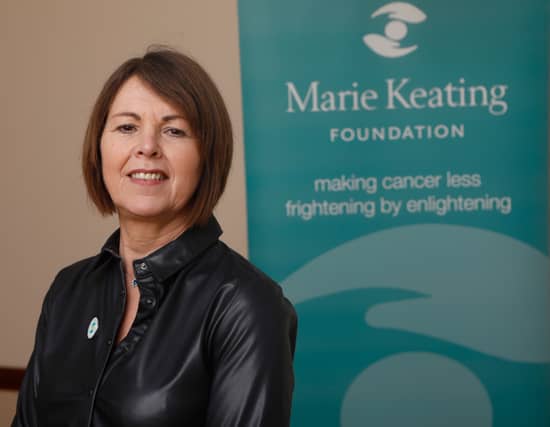

The Marie Keating Foundation will host a six-week programme for cancer survivors in Mayo next month
Cancer is something that has touched all our lives in one way or another, whether it’s been a personal journey or one that a friend or family member has endured.
The Marie Keating Foundation was set up by the Keating family following their mother, Marie’s death from breast cancer in 1998.
The family promised to provide the people of Ireland with vital information, advice and support on the signs and symptoms of cancer and help to prevent it or detect it at its earliest stages, and that is exactly what they are doing.
The foundation will be hosting a free in person survivorship workshop in Castlebar for people recovering from cancer as part of its ‘Survive and Thrive’ six-week programme.
The programme provides support to people who have completed their cancer treatment, helping them with their emotional and physical journey through life after cancer.
Speaking to The Mayo News, Helen Forristal, Director of Nursing Services at the foundation, said they began working on the programme a decade ago.
“The concept of survivorship hadn’t really taken off as part of the treatment plan. In America, it’s a big part of the cancer treatment plan, and we adopted through the National Cancer Control programme in Ireland a method of survivorship that comes from Stanford University. It’s an evidence-based programme for people with chronic illness but also with cancer.
Navigating a new normal
The Mayo programme will be facilitated by nurse Catherine Murphy, and breast cancer survivor Anne Mynes.
“The programme is for people who have completed their treatment, or may be on some maintenance treatment like hormone therapies or tablets, but the point is I suppose when people complete treatment, and they’re out the other side, they’re really trying to navigate themselves into a new normal after cancer, and cancer is a life-changing event,” Helen explained.
“A lot of the discussions and interactions would include topics such as coping with stress and anxiety; and I would emphasise the anxiety because it often doesn’t go away, or it might go away for a while and reappear.
“When somebody’s had a scan or blood test, and they’re waiting for the results, it’s informally called ‘scanxiety’ and it’s very real. So, a lot of people despite completing treatment will feel this intermittently throughout their lives going forward; the reality for everybody who’s had a cancer diagnosis is living with uncertainty.”
Sixteen people are taking part in the Mayo programme, which is multifaceted and comprehensive.
“We teach them to make action plans week on week,” Helen said, “and those action plans have got to be fairly realistic for them, something that they can achieve, and they’re fairly confident that they will achieve. So that’s a really important aspect of them self-managing themselves into their future.”
Alongside subject like nutrition and activity, less obvious topics such as intimacy and sexuality are also brought to light at the workshop. These are called ‘hidden losses’.
“They’re really important aspects to openly discuss because they do not get discussed very often. This is a very safe place for us to have that discussion. It’s confidential, and I always feel that people open up, and they get as much as they give,” she explained.
After finishing the six-week programme, Helen says she sees ‘transformations’ among participants.
“I see people change, and I see people open up, and sometimes it’s as simple as talking about some of the issues they go through.”
Giving back
The charity runs an array of programmes, suitable for those living past, through, and with cancer.
“We run a programme with the HSE, and it’s for survivors by survivors, we have trained people who work in the HSE who have had cancer, and they’ve come out the other side, and they want to give back.
“We also run programmes for people who are living beyond cancer, people where their cancer is incurable. That one is called ‘Positive Living’, and I must say we have a beautiful group of women, mainly, who have metastatic breast cancer and metastatic bowel cancer. I facilitate that programme, I watch them, I learn from them. They’re phenomenal in how they live their lives, and they would teach you and me how to live our best lives by just watching.”
Speaking on prevention and education, Helen said we are unfortunately seeing more people, particularly under the age of 50, with bowel cancer.
“We did a campaign earlier this year to actually decrease the screening age to way under 59, in line with the UK having a screening age of 50, and Australia and America having a screening age of 45. We’re way behind the Europeans,” she explained.
Less frightening by enlightening
Helen advises people to look at the Healthy Ireland framework and actions people can take to make better lifestyle changes.
She mentioned quitting smoking, eating a healthy diet and managing wait, and being safe in the sun. “We didn’t get a very good summer this year, but still, the ultraviolet rays are out, and we must manage ourselves safely in the sun.”
Commenting on Irish schools’ cancer-awareness programmes, she said: “Vaccination is another aspect of good health where, I guess, we’d be targeting our school’s cancer awareness programme for young boys and girls now in First Year, to have the HPV vaccination to reduce the risk of cervix cancer and deep-throated, mouth, head and neck cancers,” she said.
Most importantly, she emphasised the importance of attending screenings.
“I suppose the other thing is screening, and so if you’re of the age of screening, if you do get a letter in the post, and you’re to attend for a screening service, please do that. It’s a free service. It is for the ‘walking well’, it’s not for people who have symptoms.
Overall, the Marie Keating Foundation is keen ‘to make cancer less frightening by enlightening’. If this seems like something that could benefit you or someone you know, do contact the organisation.
While next month’s course is now full to capacity, those interested can add their name to a waitlist.
“Our Mayo programme is full to capacity,” Helen explains, “If we have dropouts, of course, we will take on new registrations, but we’re always running these programmes, we run all year, and some of them are online. We have a waiting list, so please put your name forward, and we will certainly facilitate a programme for you in the coming months.”
• To find out more about the Marie Keating Foundation’s Survive and Thrive courses, or the many other supports the organisation offers, visit www.mariekeating.ie.