

“A small price for a fair deal,” Mayo TD calls on Government to align livestock VAT rate
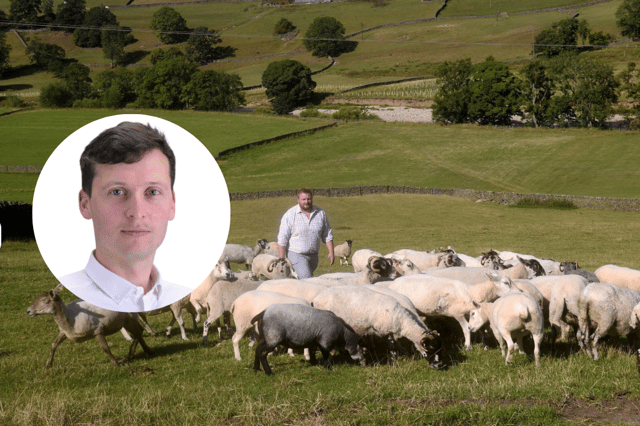

Paul Lawless TD says Budget should address VAT anomaly affecting farmers and marts
Mayo TD Paul Lawless has called on the Government to use the upcoming Budget to align the livestock VAT rate with the farmer flat-rate addition.
Speaking after an Agriculture Committee meeting, Deputy Lawless said officials had confirmed that the Government had the power to address the VAT anomaly currently affecting farmers selling livestock through marts.
Since January, the flat-rate addition paid to unregistered farmers has been 4.5 per cent, while VAT on livestock sold through marts remains at 4.8 per cent.
Deputy Lawless said this was the first time since the scheme was introduced in 1990 that the flat rate had fallen below the livestock VAT rate.
“Farmers selling through marts are losing the difference on every animal they sell. It’s not acceptable,” he said.
He said farmers faced VAT costs throughout the production process, including on feed, fertiliser, diesel and veterinary services, without being able to reclaim those costs.
“A farmer spends eighteen months rearing an animal. He pays VAT on the feed, the fertiliser, the diesel and the vet, and he can’t claim a cent of it back,” Deputy Lawless said. “When he brings that animal to the mart, the docket comes back short. It’s the same on every animal, every sale, all year.”
He said the deduction was creating frustration among farmers and was placing marts at a disadvantage compared with private sales.
“The first thing he does is look at the mart and ask, ‘What are ye taking off me now?’ The mart isn’t taking it. The State is,” he said.
The Aontú TD said the Irish Co-operative Organisation Society had told the committee that mart throughput was down by between eight and nine per cent, with the VAT anomaly contributing to the decline.
“When a farmer can sell privately and avoid the deduction, some will,” he said. “Our local marts give farmers a fair price and guaranteed payment, and they’re the heart of rural towns across Mayo. They’re being put at a disadvantage by a quirk in the tax system.”
According to Deputy Lawless, officials told the committee that European Union rules limited what could be done with the farmer flat-rate addition, but that the livestock VAT rate was a matter for the Government.
He said the livestock rate could be reduced provided it remained below five per cent.
“The solution is in the Government’s own hands,” he said.
ICOS has estimated that aligning the two rates would cost between €5 million and €8 million.
Deputy Lawless described this as a relatively small cost compared with the impact on farmers.
“That’s a very small price for a fair deal at the mart, especially when last year’s cut to the flat rate from 5.1 per cent to 4.5 per cent took €61.5 million out of farmers’ pockets,” he said.
“I’m calling on the Minister for Finance to align the livestock rate with the flat rate in this Budget, and to keep them aligned.”
Deputy Lawless said farmers were under significant financial pressure and could not afford to continue paying for what he described as an anomaly the Government had the power to resolve.
“As one witness put it today, every penny is a prisoner this year,” he said.