

Erris whale
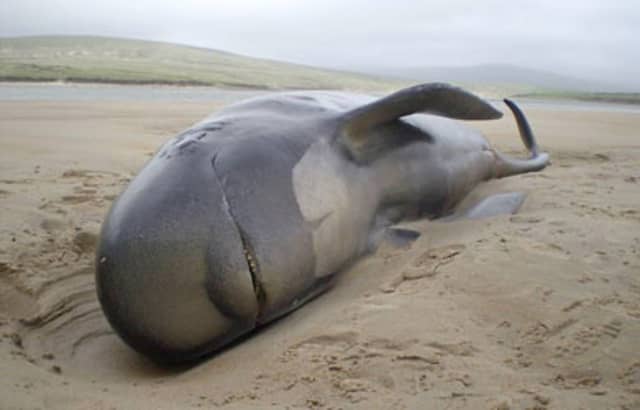

A whale that washed up dead in Erris is unlikely to have died due to seismic activity in Broadhaven Bay.
Seismic activity unlikely cause of whale’s death
Anton McNulty
A WHALE that washed up dead on Glengad beach, Carrowtigue on the Friday of the August bank holiday weekend is unlikely to have died due to ongoing seismic activity in Broadhaven Bay, according to a member of the Irish Whale and Dolphin Group (IWDG).
The four-and-a-half-metre long pilot whale was found dead overlooking Broadhaven Bay on Friday, August 3, before being buried later that day on the beach. The discovery of the whale caused concern amongst locals who felt that the ongoing seismic survey of Sruth Fada Conn and Broadhaven Bay, associated with oil and gas exploration, may have attributed to the whale becoming stranded at Glengad.
Environmentalists have argued that noise pollution such as seismic and sonar activity is connected to whale beaching and that the beached whales experience decompression sickness.
However, Mr Mick O’Connell, Stranding Co-ordinator with the IWDG, told The Mayo News that last year 146 whales were stranded along the Irish coast and it was not unusual for a pilot whale to become stranded. He said there was no way of establishing the death of the whale and nobody in Ireland was qualified to give a diagnosis that may determine if noise pollution was the cause of death.
“Seismic activity could affect the health of whales and dolphins but it is a dodgy game to be picking things out of the air and blaming it for the whale’s death. There are 101 things the whale could of died of, and noise pollution is only one of those. It is possible that it died on the sand but usually they die at sea and wash up on the shore. If more whales wash up in the same area over a short period of time that will be unusual, but a big animal like that to wash up is not unusual,” he said.
The procedure the IWDG follow when a dolphin or whale becomes stranded is to take a picture of the mammal before taking a skin sample which is sent to a data bank in the Natural History Museum.