

COUNTY VIEW: When tourism becomes too much of a good thing

There was a brief but interesting side discussion at a recent meeting of West Mayo Municipal District. The Louisburgh councillor, Chris Maxwell, enquired whether some parking at Roonagh Pier could be reserved for islanders who make the daily crossing to Clare Island, but who find it difficult, in high tourist season, to find parking space for their cars. The official reply was that such an idea was a non starter, with Maxwell observing that while tourism might be vital, the needs of the locals should be considered as well.
The meeting moved on, and that was that. But could it be that in that scenario was a microcosm of a greater problem, a harbinger of things to come? Amplify the Roonagh story a thousand times and it begins to resemble a situation across Europe, where the needs of mass tourism have overtaken the rights of locals to an established way of life.
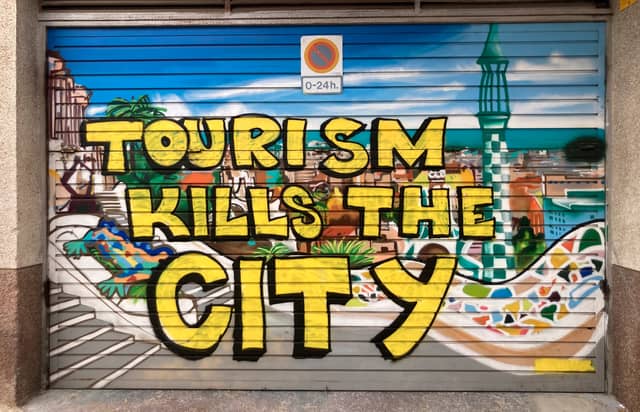
Last month, thousands of residents of Barcelona marched through the city in protest at the explosion in tourism and, as they see it, the detrimental effects on the lives of locals. Where the tourism promoters had hung airport slogans to say ‘You deserve Spain’, the graffiti on the town’s public walls read ‘Tourists go home – you are not welcome’. The Government initiative to recover the tourism losses incurred during Covid had succeeded only too well, and now had come the backlash. The 90-million-a-year influx of visitors was more than the locals could cope with, and the greater public had decided that the economic benefits of being over run by visitors was simply not worth the hassle.
The causes of the rise in mass tourism are manifold, not least because of the marketing zeal which held that you can never have too much of a good thing. Low-budget flights, stag weekends, cruise liner visits, cheap packages have all contributed to a dumbing down of proper tourism, where holidays based on booze and sun have overtaken the more authentic motives of culture, arts and heritage.
In Spain and France and Italy, locals complain of the loss of a sense of community when their towns and villages become glorified theme parks for visitors. Community identity and local culture are erased when visitor numbers get too big. The town square ceases to belong to the locals, and the leisurely, quotidian pace of life is distorted when every pavement is crowded with strangers.
Local councils in the tourism regions are starting to adopt various policies to find the balance between catering for visitors and meeting the needs of residents. Several have resorted to imposing tourist taxes. These, however, seem to have done little more than boosting local municipal coffers while failing to control numbers. Venice, one of the first to introduce taxes, now bans visitors from loitering to take in the view when crossing the city’s bridges.
But by far the greatest complaint is the effect which visitor numbers is having on housing costs. With the ubiquitous growth of the Airbnb industry, rental costs have soared in cities where all available accommodation has in effect been given over to tourists. The knock on effects are huge – retailers and hospitality providers are unable to recruit staff simply because workers cannot afford the high cost of even tiny apartments.
Granted, we in Ireland are a long way off from suffering the deprivations caused by mass tourism. And that steady patter of rain on the front window, in mid August, hardly heralds a mad rush of sun-seeking tourists to the green isle. But the caveat of unbridled tourism growth remains. And the old adage of being careful what you wish for is coming home to roost for those European resorts that believed that there was no such thing as too much.