

Council adopt new Mayo Renewable Energy Strategy despite reservations



Mayo councillors express concern that new Renewable Energy Strategy will be a blank cheque for windfarm developers
MAYO councillors agreed to adopt an updated draft Renewable Energy Strategy for the county despite some reservations with one councillor describing it as 'blank cheque' for private wind developers.
The new draft Renewable Energy Strategy (RES) came before councillors at the monthly meeting of Mayo County Council on Monday where they were asked to consider variations to the strategy following submissions from State agencies and members of the public.
The new RES aims to ensure that Mayo is at the forefront of renewable energy production with the county having a potential capacity of 1,114 MW from existing and permitted renewable energy development within the county.
Mayo is currently in the top seven counties for renewable energy generation equating to 6.8 percent of renewable energy produced nationally.
Buffer Zone
Following a lengthy and at times divisive debate on the matter, the draft RES was adopted following a vote by 21 votes to five with a recommendation that no developments should take place within 1km of a settlement.
The inclusion of the 1km buffer zone was a contentious issue as it went against the recommendations of the Office of the Planning Regulator to remove the buffer zone as it was overly restrictive and could hinder renewable energy development.
Mayo County Council had agreed to follow the recommendation of the OPR and omit the 1km buffer zone in the draft RES but councillors insisted on it being included.
The OPR also found that certain objectives of the draft RES were in conflict with national and regional policy by limiting renewable energy projects and grid infrastructure development and recommended that they are not included.
Requirements included by council planners such as favouring undergrounding powerlines as the preferred option and demonstrating grid capacity at planning stage and restricting development to near existing grid infrastructure were deemed restrictive by the OPR and they were omitted from the draft RES.
Dream for developers
Castlebar-based Independent councillor Harry Barrett told the meeting that he was in favour of renewable energy but felt that the draft RES would be rejected as he felt there was no benefit in it for communities.
“This is a dream for developers and a way of battering through wind farns without any benefit for the local people,” he said.
“We are not going to be the whipping boys for wind energy in this county. Yes we know our targets. We have done the heavy lifting and other counties need to do more. If we reject this at least the voice goes back to the Government and the OPR that we are not happy. There are too many liberties being taken here and I recommend we reject it.”
Sinn Féin councillor Gerry Murray said he was astonished that the OPR had recommended omitting conditions in the draft RES and felt that the renewable energy policy was too much in favour of the private developers.
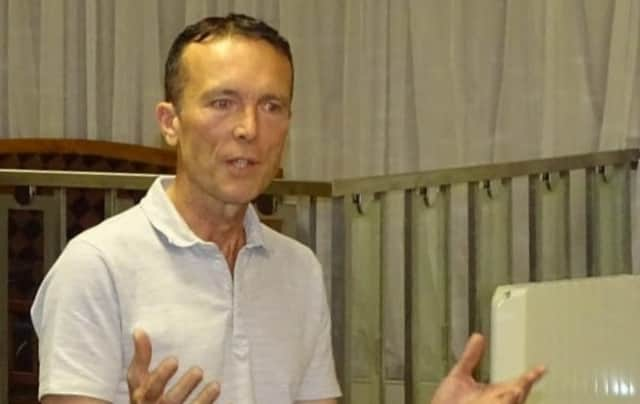
“What is in this document is essentially a blank cheque for the renewable energy sector. If you look at the submissions from the OPR and the Department of Energy and Climate Change they are practically the same... it is a total and complete capitulation to the renewable energy sector,” he said.
Cllr Murray claimed that as a result of deregulation, the country now has the most expensive electricity in Europe and described the business model for wind energy as chaotic.
The meeting heard that the decision on adopting or rejecting the draft RES had to be made before August 4 and it was claimed that failure to do so would result in one being imposed on the county.
Robust
Senior planner with Mayo County Council, John McMyler said the current RES is not fit for purpose and felt that despite the OPR recommendations, the draft RES would be far more robust than the existing one in dealing with wind farm applications.
Mr McMyler also addressed concerns that the Ceide Coast and the new Joyce Country & Western Lakes UNESCO Global Geopark won't be protected by the draft RES saying that there are restrictions to developing windfarms in those areas.
Fianna Fáil councillor Damien Ryan said that he would only adopt the strategy subject to many conditions being attached and hit out at the OPR for eroding the power of local authorities.
Chief Executive Kevin Kelly said that the draft RES provides more protection for communities than the previous one and that developers would be happy with the existing one. Regarding the exclusion of the buffer zone, he said that the council were informed that it was not in accordance with national policy.
Fine Gael councillor Peter Flynn said that some valid points were raised during the debate but stressed that councillors had a decision to make and recommended that it should be adopted. His party colleague Gerry Coyle said he did not like outside bodies interfering with a Mayo strategy but will vote for it despite having his doubts about it.
After a debate lasting close to two hours, a proposal was made to adopt the draft RES with an amendment that a 1km buffer zone will be included. The proposal was passed by 21 votes to five.