

Calls grow for family court reform as Mayo woman speaks before Justice Committee

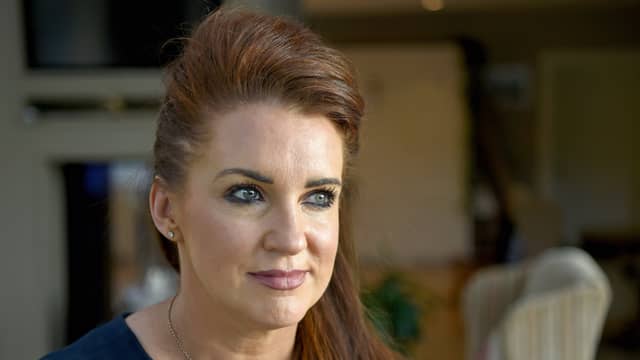

Margaret Loftus appeared before the Oireachtas Justice Committee to give evidence on gender-based violence and systemic failures in policing and the courts
A Mayo woman who endured a brutal domestic assault by a serving Garda and spent over a decade fighting for justice has described Ireland's family courts as "a modern-day version of mother and baby homes" — and her case is now driving a nationwide push to tear down the wall of secrecy surrounding those courts.
Margaret Loftus, a former member of An Garda Síochána from Co. Mayo, is the survivor of a domestic violence assault in 2012 at the hands of her ex-husband, Garda Trevor Bolger. After enduring years of personal, professional and legal hardship, she broke her silence following the imposition of a three-month suspended sentence on her abuser.
Her damning words before the Oireachtas Justice Committee have resonated across the political divide and galvanised TDs from multiple parties into action.
58 court dates
Ms Loftus told TDs and senators that after she obtained a barring order against her former partner, her pay was stopped, transfers were cancelled, and "unauthorised" welfare checks were carried out on her children in Mayo.
The case was before the courts 58 times over six years. During that period, while charges of threats to kill were being prepared for the Director of Public Prosecutions, Bolger was promoted within the force and given a State-issued firearm.
Ms Loftus confirmed to the committee that despite entering a guilty plea, her former husband remains a serving member of An Garda Síochána.
Describing the impossible bind facing those in her situation, she asked the committee: "The person who that barring order was granted against left that courtroom, got their State-issued firearm and hopped into a patrol car. Who do you call in that situation?"
The In-Camera Rule
Central to Ms Loftus's testimony — and to the growing political outcry — is the in-camera rule, which governs family court proceedings and bars those involved from speaking publicly about what happens inside those courtrooms.
Aontú TD Paul Lawless, a member of the Independent Technical Group in the Dáil, is demanding the rule's reform. His party brought a Dáil motion on the issue this week.
"Too often have I come across situations where people — primarily women — have had horrendous experiences in the family court," Deputy Lawless said. "Where perhaps they have their children taken into State care, feel that there were huge flaws in the free legal aid package they received, where they were poorly represented, or where wrongdoing occurred in the court room. These women sometimes are left feeling that they can't talk to a psychologist, a guard or a TD about their experience because of the heavy-handed nature in which the in-camera rule is applied within the courts."
Lawless pointed directly to Ms Loftus's Oireachtas testimony as proof of the rule's overreach. She told the Justice Committee that the in-camera rule prevented her from using in the criminal court the same evidence she had presented in the family court — even when speaking under Dáil privilege.
"This shows a complete over-reach of the rule," said Lawless. "She relayed some of the horrific attitudes she experienced in the family court but couldn't go into detail, even under Dáil privilege because of the in-camera rule."
'How are we supposed to legislate when we can't even see the problem?'
Deputy Lawless said the secrecy surrounding family courts is preventing lawmakers from understanding — let alone fixing — the failures occurring within them.
"There are huge problems in Tusla, and huge issues with some of the court-appointed 'experts' who play such a massive role in cases before the family courts, custody cases, child protection cases and so on," he said. "The secrecy in that court is preventing TDs who are the policy makers and law makers in this country from even getting an understanding of what's happening in these courts. How are we supposed to legislate around it or fix the problem when the in-camera rule is prohibiting parents and children from telling us what the problem is?"
He called for reforms modelled on changes already made in Britain, along with dedicated supports and complaints mechanisms for those who feel wronged by the family courts, and counselling for parents separated from their children.
60,000 calls
Ms Loftus placed her experience within a stark national picture. More than 60,000 calls relating to coercive control were made to Garda stations last year, yet since January 2019 only 25 convictions have been recorded — just two of which carried coercive control as the sole charge. Almost half of the 32,000 victims who sought support from Women's Aid in a single year reported negative experiences with An Garda Síochána.
National campaign
A campaign to reform the family law sector, including the in-camera rule, is now formally underway, with Ms Loftus among its supporters alongside other survivors and advocacy groups.
Deputy Rose Conway-Walsh, who hosted Ms Loftus at Leinster House, said her testimony exposed "serious flaws in how victims of domestic abuse are treated within our justice system when their abusers are serving members of An Garda Síochána." She said no victim should have to endure a 14-year legal battle involving 58 court dates in pursuit of justice.
For Margaret Loftus, her fight for justice has become something larger than her own case.