

"When farms work for women, they work better for everyone": North Mayo initiative puts women centre stage
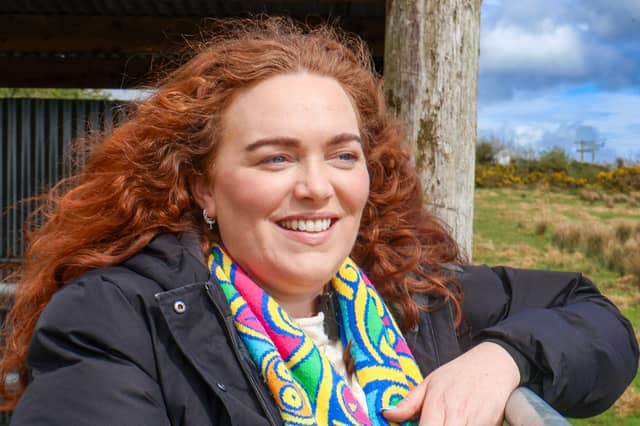

New EU-funded project to support 60 women farmers with practical training, confidence-building and farm-based solutions launches with community celebration in Mayo
For generations, women have been the invisible backbone of Irish farming — feeding calves before dawn, balancing livestock care with childcare, managing books, budgets and homes, often without recognition or support. Now, a pioneering North Mayo initiative hopes to change that.
Making Farms Work for Women will officially launch with a community event on Sunday, June 7, at the Kennedy Glasgow Centre in Ballina from 2pm to 4pm.
At the heart of the project is Claire Brennan, an agricultural advisor working in North Mayo, who says the idea grew directly from conversations with local women farmers.
“I noticed that in mixed farming groups, the men were usually asking the questions,” she explains. “The women would often come up afterwards and ask privately. I began to wonder — if we created a space where women felt comfortable, would they speak more openly about the challenges they face?”
That simple observation sparked women-only discussion groups in 2024, creating a safe space for farmers to learn, share ideas and ask questions without fear of judgement.
What emerged was striking: many women were struggling not because of a lack of ability, but because farming systems often weren’t designed with them in mind.
“Something as simple as lifting feed or fertiliser bags can become a real challenge,” Claire says. “Many bags weigh 25kg or 50kg. Sometimes women were waiting for someone else to come home before they could finish a job.”
Others spoke about machinery they had access to but lacked confidence using, training opportunities that clashed with caring responsibilities, or practical problems such as wet weather gear designed for male body shapes.
“Even asking women what would make farming easier felt new to many of them,” Claire says. “People are often surprised someone is asking.”
Funded through the European Innovation Partnership (EIP), co-funded by the European Commission and the Department of Agriculture, Food and the Marine, the initiative will work directly with 60 women farmers across North Mayo over the next three years.
Rather than imposing solutions, the project will focus on practical, locally informed changes — from improving livestock handling confidence and access to better-suited tools, to bespoke local training delivered in familiar settings.
There is also a strong focus on future generations. Claire hopes to encourage young girls to see farming as a possibility by creating family learning experiences and helping parents think differently about succession.
“Often farms are left to whoever shows interest,” she says. “But if girls aren’t included from a young age, how can they show interest later?”
The official launch on Sunday, June 7 promises to reflect the project’s community spirit. Families are invited to enjoy food, music, face painting, a children’s corner and live farming demonstrations, including a teaching cow used to demonstrate calving.
For Claire, making the event family-friendly mattered.
“Women are busy,” she says. “They’re farming, working, caring for families. I wanted this to be something they could bring their children to and feel proud of.”
Her vision is ambitious: a project that grows beyond Mayo into a national movement. But at its core lies something simple — recognising women’s contribution and making life on farms work better.
“Women have always been part of farming,” Claire says. “Now it’s about making sure farming works equally well for them too.”
All are invited to join the launch event on Sunday, June 7 at 2pm at the Kennedy Glasgow Centre.