

New beehive biodiversity drive launched at Mayo solar farm
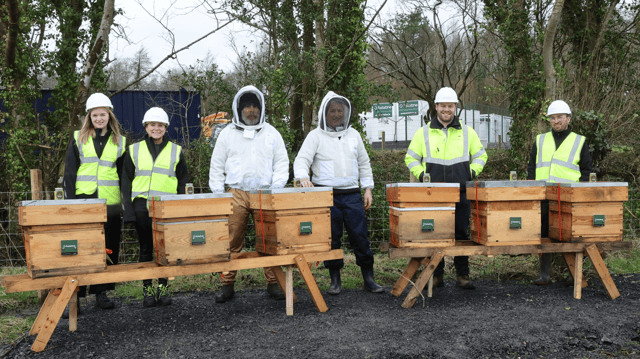

The initiative supports pollinators and wildlife at renewable energy sites across Ireland.
Irish energy transition specialist Astatine has unveiled a pioneering beehive biodiversity initiative at its solar PV installations in Mayo.
These are the first six hives installed at a solar farm serving a Ballina-based beverage company. The project aims to support up to 300,000 native Irish honeybees (Apis mellifera mellifera) at each site during peak summer months, boosting local biodiversity while complementing the company’s renewable energy efforts.
The hives at the Ballina site will be managed by local beekeeper Jamel Neary, with inspections conducted by father-and-son duo Louis and David Bolger of The Business Beekeeper. Honey produced from the hives will be harvested with colony welfare as a priority.
“Solar farms already reduce carbon emissions, but they can also be biodiversity hubs,” said Tom Marren, CEO of Astatine. “By introducing beehives, we are strengthening local ecosystems, supporting farmers, wildlife, and the wider community. This initiative shows how renewable energy can work hand-in-hand with nature.”
In addition to beehives, Astatine plans to plant native Irish wildflowers and install “bug hotels” across its sites. These measures are expected to encourage pollinator activity, provide nesting grounds, and support a richer variety of wildlife.
The initiative offers a range of benefits. First, it supports biodiversity by enabling honeybees to pollinate crops, hedgerows, and wildflowers, which in turn enhances plant variety and provides food and habitat for other insects and birds.
Then, it strengthens ecosystem resilience, as improved pollination contributes to healthier habitats and more robust food chains.
Finally, the hives will produce honey from the second season onwards, creating a natural product that forms part of the site’s wider sustainability programme.
The seasonal cycle of the hives will see colonies becoming active in spring, peak pollination and honey production during summer, the first harvest expected in late summer/early autumn 2026, and a restful period through autumn and winter.
Marren added: “Client response to the beehive initiative has been very positive. We plan to roll out hives at all our project sites nationwide and continue exploring other ways to enhance biodiversity across Ireland and beyond.”
This initiative highlights how renewable energy infrastructure can provide environmental benefits far beyond energy generation, supporting pollinators, wildlife, and sustainable practices in local communities.
Photo caption: Astatine team members and beekeeping support pictured behind 6 beehives set up at the Ballina astatine site.