

Wave of seaweed licence applications could mark turning point for Mayo’s coast
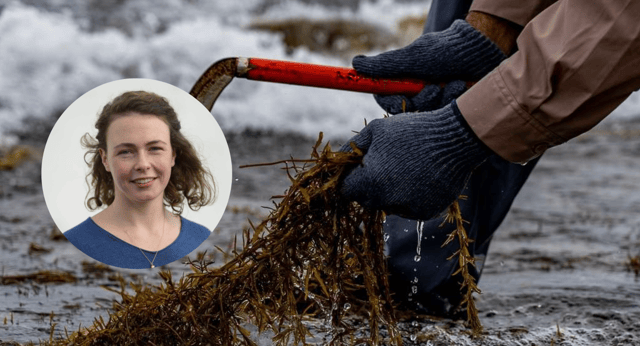

Clew Bay proposal part of wider push that campaigners say may reshape traditional harvesting model.
A series of seaweed harvesting licence applications along Ireland’s west coast — including one targeting Clew Bay — could signal a significant shift in how marine resources are managed, with potential long-term implications for coastal communities in Mayo.
An application by BioAtlantis is currently before the Marine Area Regulatory Authority (MARA) seeking permission for seaweed harvesting in Clew Bay. The proposal is at the statutory observation stage, with prescribed bodies invited to make submissions before it moves to public consultation.
However, the Clew Bay application is not an isolated case.
Environmental campaigner Saoirse McHugh said she believes the Clew Bay proposal must be viewed in the context of several other seaweed licence applications around the coast.
“I’m looking at this BioAtlantis application in light of several others. BioAtlantis have an application in for Clew Bay and Kenmare Bay. Arramara Teoranta have applications in for, I think, five bays in Galway. And a company called Oileán Glas Teoranta (OGT) have applications in for two or three bays up in Donegal.”
Taken together, the developments have prompted concerns that Ireland could be on the cusp of a new regulatory and commercial model for seaweed harvesting — one where companies hold licences directly rather than sourcing from independent local cutters.
A new path for marine resources?
Saoirse McHugh believes the cumulative effect of the applications could be significant and transformative.
“For generations, seaweed cutters have carefully harvested seaweed along the coast and sold it to companies,” she said. “Corporations having licences in their own right would be a significant departure from the norm.”
Historically, seaweed cutting along the Mayo coast has been carried out by independent harvesters, often operating within family or community traditions stretching back decades. Processing companies then purchased the harvested seaweed.
Under the emerging model, companies would instead apply for and hold harvesting rights themselves.
While each application is being assessed on its own merits under the Maritime Area Planning framework, McHugh argues that a decision in one bay could set an informal precedent.
“If one goes ahead, it would make it more likely for the others,” she said. “Equally, if one was stopped, it might influence the rest.”
What it could mean for Mayo
For Mayo, the Clew Bay proposal is particularly significant.
Clew Bay is not only an ecologically rich marine environment but also an area with a long history of small-scale seaweed harvesting. Concerns have been raised that a shift toward corporate-held licences could alter the balance of power in the sector.
“There already are people employed cutting seaweed,” McHugh said, stressing she was not speaking on behalf of cutters. “The fear is that if corporations own the licences, cutters could be reduced to working for wages, or the price paid for seaweed could be driven down.”
She said that while job creation is referenced in applications, “the burden of proof should be much higher” in demonstrating clear local economic benefit, particularly where livelihoods already exist.
Environmental questions
Beyond employment concerns, environmental considerations are also central to the debate.
Seaweed plays a key role in coastal ecosystems, contributing to marine food webs, stabilising sediment and potentially helping mitigate coastal erosion. There is also ongoing scientific research into the role of seaweed in carbon absorption.
“Seaweed is the foundation of a lot of coastal food webs,” McHugh said. “It slows coastal erosion and sediment loss, and there’s ongoing research into how much carbon it absorbs.”
“If corporations are given licences, it cannot be a case where they are effectively regulating themselves,” she said, calling for clear and robust oversight mechanisms.
The BioAtlantis Clew Bay application refers to sustainable hand harvesting methods. Any approval would be subject to conditions set by MARA following assessment and public consultation.
The BioAtlantis Clew Bay application refers to “sustainable hand harvesting of seaweed”, and other applications around the coast also advertise hand harvesting methods. However, if any approval would be subject to conditions set by MARA following assessment and public consultation, critics argue that the key issue is how such claims would be verified in practice, and what mechanisms would be in place to ensure agreed harvesting limits are not exceeded.
Public awareness
While a recent online petition initially referenced a separate, withdrawn foreshore application, McHugh said it had helped raise awareness about marine licensing more generally.
“I think a lot of people didn’t know this was going ahead,” she said. “There’s a strong cultural and emotional attachment to seaweed along the west coast.”
She said meaningful public consultation would be essential once the Clew Bay application reaches that stage, particularly given what she described as the potential long-term implications for coastal communities.
Consultation to come
The Clew Bay proposal is expected to move to public consultation following completion of the statutory observation phase. That stage will give individuals, community groups and stakeholders in Mayo an opportunity to formally submit their views.
For Saoirse McHugh, the “worst-case scenario” would involve a ramping up of harvesting intensity combined with reduced livelihoods for traditional cutters and ecological damage if extraction levels were too high.
With multiple applications now under consideration across the west coast, decisions taken in the coming months could shape not just Clew Bay, but the future direction of Ireland’s seaweed industry.